Endo Belly: Endometriosis Gas and Bloating Explained
You wake up with a stomach that's perfectly flat. By noon, you look four months pregnant. By evening, the waistband of your jeans has become your personal nemesis, your lower abdomen aches with a dull, relentless pressure, and no amount of peppermint tea is making a dent. You haven't eaten anything unusual. You're not sick. This is just Tuesday.
If that scenario sounds uncomfortably familiar, you may be dealing with endo belly — one of the most disruptive, least-discussed, and most routinely dismissed symptoms of endometriosis. It's not garden-variety post-lunch bloating that disappears after a walk around the block. Endo belly is dramatic, painful, and capable of derailing your day, your wardrobe, and your confidence without so much as a warning.
Endo belly refers to the severe abdominal bloating and distension associated with endometriosis, a chronic inflammatory condition in which tissue similar to the uterine lining grows outside the uterus.
It affects an estimated 1 in 10 women of reproductive age — roughly 11% of women between ages 15 and 44 in the United States — and yet it often takes years to diagnose. The bloating it causes isn't a minor side effect. For many, it's one of the most physically and emotionally taxing aspects of living with the disease. This article breaks down exactly what's happening when endo belly strikes, why it's so closely linked to endometriosis, how it differs from other types of bloating, and what practical strategies — including one tool that has nothing to do with your diet — can help you manage it.
What Exactly Is Endo Belly?
Regular bloating — the kind you get after a bowl of beans or a carbonated drink — is a temporary distension that resolves within hours. Endo belly operates on a completely different level.
It's characterized by rapid, significant abdominal swelling that can appear within minutes of waking up, with distension dramatic enough that women frequently describe going from a flat stomach in the morning to looking visibly pregnant by afternoon — accompanied by real pain or pressure, not just mild discomfort.
Several features distinguish endo belly from other types of bloating:
The speed of onset.
Endo belly can develop within minutes of getting out of bed, not gradually over the course of a meal.
The pain factor.
Unlike regular bloating, endo belly frequently brings cramping, pelvic pressure, a deep aching sensation, or sharp pain that radiates to the lower back and legs.
The unpredictability.
While many women notice endo belly worsens around their menstrual cycle, it doesn't confine itself to the period week. Flares can occur at any point in the month, triggered by stress, certain foods, bowel movements, or nothing identifiable at all.
The persistence.
Endo belly doesn't resolve with a bit of movement or a few hours of rest. It can last days, returning repeatedly throughout the month.
The accompanying digestive disruption.
Gas is almost always part of the picture — alongside nausea, constipation, diarrhea, or a cycle of both, sometimes within the same day. Many women also experience skin sensitivity around the abdomen during flares and difficulty breathing deeply when the distension is severe.
The Endometriosis-Digestion Connection: Why Your Gut Gets Caught in the Crossfire
To understand why endometriosis causes such significant digestive disruption, it helps to understand what the condition actually does — and where.
In endometriosis, tissue similar to the uterine lining grows outside the uterus. While the ovaries, fallopian tubes, and pelvic lining are common sites, endometriosis frequently affects the digestive tract too — the bowel, rectum, appendix, and bladder. Studies suggest bowel involvement occurs in anywhere from 3% to 37% of endometriosis cases, making digestive symptoms far more than a coincidental side effect.
When endometrial-like lesions form on or around the bowel and pelvic structures, several interconnected problems develop:
Inflammation.
Endometriosis is, at its core, an inflammatory disease. The lesions trigger a chronic inflammatory response in surrounding tissue, directly affecting bowel function — altering motility, increasing intestinal sensitivity, and contributing to that characteristic swelling.
Nerve sensitization.
Endometrial lesions can involve the nerves supplying the bowel and pelvic floor, creating heightened sensitivity throughout the region. This is why endo belly gas and bloating often feel far more painful than the same symptoms would in someone without endometriosis — the nervous system in the area has been turned up to full volume.
Adhesions.
As the body responds to lesions, it can form adhesions — bands of scar tissue that cause pelvic organs and the bowel to stick together. Adhesions can constrict or kink sections of the bowel, disrupting the normal movement of food and gas and causing both pain and bloating.
Altered bowel motility.
Endometriosis affects the muscular contractions that move content through the gut. Some women experience sluggish motility leading to constipation and gas accumulation; others experience accelerated motility and diarrhea. Many experience both at different times.
Hormonal influence on the gut.
Endometriosis is estrogen-dependent — lesions respond to menstrual cycle fluctuations, which explains why symptoms often intensify before a period. The gut has receptors that respond to estrogen, so as hormone levels shift throughout the cycle, digestive function shifts along with them.
Endo belly isn't a simple gas problem with a dietary fix.
It's the digestive system caught in the middle of a chronic inflammatory condition involving the organs immediately surrounding it.

Why Endo Belly Isn't "Just Bloating" — The Full Cost of the Condition
If you've ever had a medical professional suggest you try cutting out dairy or taking a probiotic in response to your endo belly, you'll understand why this section exists.
Endo belly is frequently minimized — both medically and socially — because bloating is perceived as a minor complaint. It isn't. For women with endometriosis, it's a physical, social, and emotional burden that touches virtually every area of daily life.
The physical reality.
The distension can be severe enough that clothing that fit in the morning is unwearable by afternoon. Many women keep two sizes on hand — one for good days, one for flare days. The accompanying pressure and pain can make sitting at a desk, exercising, or sleeping genuinely difficult.
The social dimension.
The most commonly reported indignity? Being asked if you're pregnant. Beyond that, the unpredictability of flares creates a constant low-level anxiety: at a work function, on a date, mid-presentation, in a meeting where you can't quietly excuse yourself. The gas that accompanies endo belly adds another layer — unpredictable, sometimes forceful, and often odorous in exactly the settings where it feels impossible to manage discreetly.
The emotional toll.
Living with a condition that is painful, chronic, and frequently dismissed creates real psychological strain. Many women describe feeling like their body has become unreliable — a source of anxiety rather than capability. Endo belly affects self-image and confidence in ways that compound over time.
None of this is minor. None of it is "just bloating."
Endometriosis, IBS, and the Diagnostic Maze
Here's the part that makes endometriosis particularly frustrating: the digestive symptoms it causes look almost identical to irritable bowel syndrome. The endometriosis gas and bloating that define endo belly — combined with alternating constipation and diarrhea, abdominal pain, and sensitivity to certain foods — create a symptom profile that overlaps so heavily with IBS that misdiagnosis is the rule, not the exception.
Research suggests that women with endometriosis are significantly more likely to be initially diagnosed with IBS, and that the average time from symptom onset to endometriosis diagnosis is somewhere between 7 and 10 years.
A significant portion of that delay is attributable to digestive symptoms being attributed to IBS, dietary issues, or stress rather than being recognized as markers of a gynecological condition.
There's another complication: IBS and endometriosis co-occur more frequently than chance would predict. Having one condition appears to increase the likelihood of having the other, possibly due to shared inflammatory mechanisms. This means an IBS diagnosis doesn't rule out endometriosis — and treating only the IBS while endometriosis goes unaddressed leaves a substantial part of the problem unmanaged.
Other conditions that share features with endo belly include celiac disease, inflammatory bowel conditions like Crohn's disease and ulcerative colitis, ovarian cysts, and pelvic inflammatory disease. What distinguishes endo belly is the cyclical nature tied to the menstrual cycle, the severity of the endometriosis bloating and distension, the pelvic pain component, and the absence of resolution with standard IBS strategies.
If your bloating is severe, cyclical, and accompanied by pelvic pain or painful periods, pushing for a thorough gynecological evaluation is worthwhile — even if a previous assessment stopped at IBS.
Managing Endo Belly: Practical Strategies That Can Actually Help
Endometriosis has no cure, and endo belly can be resistant to management. That said, a combination of dietary, lifestyle, and medical approaches can meaningfully reduce the frequency and severity of flares for many women.
Dietary adjustments
A low-FODMAP diet — which reduces fermentable carbohydrates that drive bacterial gas production — is one of the most evidence-supported dietary interventions for endo belly. Foods high in FODMAPs (onions, garlic, wheat, certain fruits, beans, and dairy) are common triggers. An elimination approach — removing high-FODMAP foods and reintroducing them methodically — helps identify individual sensitivities rather than blanket-restricting everything indefinitely.
Anti-inflammatory eating is also worth prioritizing.
Fatty fish (salmon, sardines, mackerel), leafy greens, berries, olive oil, and turmeric all have meaningful anti-inflammatory properties. Conversely, processed foods, refined sugar, and excess alcohol tend to amplify the inflammatory response that drives endo belly.
Smaller, more frequent meals
This reduces the digestive burden at any one time, which can limit the severity of post-meal bloating. Eating slowly and avoiding swallowing excess air (from eating fast, talking while chewing, or drinking carbonated beverages) removes some of the easier triggers.
Heat therapy
Heat applied to the lower abdomen during a flare is one of the most consistently helpful tools for reducing both the pain and the sensation of pressure associated with endo belly. A heating pad, hot water bottle, or warm bath can provide genuine relief during acute episodes. This isn't just comfort — warmth helps relax the smooth muscle of the bowel, which can ease the cramping and motility disruption driving symptoms.
Gentle movement
Regular gentle movement between flares — walking, yoga, swimming — supports bowel motility and reduces systemic inflammation. Specific yoga poses targeting the abdomen and pelvic floor can be particularly effective at releasing trapped gas and easing tension in the surrounding structures.
Medical and hormonal management
Because endometriosis is estrogen-dependent, treatments that raise progesterone relative to estrogen — including combined oral contraceptives, progestins, and GnRH agonists — are among the most commonly used options, and many women find that hormonal management significantly reduces endo belly flare frequency. Surgical intervention — laparoscopic removal of lesions and adhesions — can provide substantial relief where bowel involvement is significant. Any treatment decisions belong with a gynecologist or endometriosis specialist. The point is that endo belly often responds better to treatment targeting the underlying disease than to dietary adjustments alone.
Tracking patterns
Keeping a record of when endo belly flares — cycle timing, food, stress levels — over several weeks helps identify personal triggers and high-risk windows, and gives you useful information to bring to medical appointments.

How Shreddies Can Help You Reclaim Your Day
Managing endo belly is a long game. Hormonal treatments take weeks to months to work. Dietary changes require patience and methodical testing.
Adhesions don't resolve without surgery. All of that is reality, and while you're working through those longer-term strategies, you still have to live your life.
That's where Shreddies USA comes in.
What Are Shreddies?
Shreddies are the world's first odor-filtering underwear — designed to neutralize flatulence odors using patented activated carbon cloth technology. They look and feel exactly like regular underwear. Nobody knows you're wearing them. But they work.
The technology at the core of Shreddies is Zorflex — a highly porous activated carbon cloth woven into the seat of every pair. When gas passes through the fabric, the carbon structure traps and neutralizes odor-causing molecules before they escape. The filter reactivates every time you wash the garment, maintaining effectiveness for 50 or more washes.
Research published in the American Journal of Gastroenterology identified activated carbon underwear as the most effective method available for removing flatulence odors. Independent research by De Montfort University found that the Zorflex fabric neutralizes odors at up to 200 times the strength of the average flatulence emission.
Shreddies were also awarded the Association for Continence Advice's Look Good, Feel Good award — recognition that effective protection and genuine wearability aren't mutually exclusive.
For women living with endo belly, Shreddies can restore confidence while dealing with some of its more frustrating symptoms, such as regular flatulence.

Why Shreddies Make Particular Sense for Endo Belly
The gas component of endo belly is unpredictable in a way that dietary management alone can't fully control. When symptoms are driven by inflammation and altered bowel motility rather than what you ate, you can't always eliminate the problem at the source. On a flare day, increased flatulence happens regardless of how careful you were at breakfast.
Consider the situations where this matters most:
The work day that goes sideways.
You woke up feeling okay. By 10am, the bloating is building and the gas is following. Back-to-back meetings, a presentation, a team lunch. You can't go home. You can't control the timing. What you can control is whether odor becomes part of the equation.
The medical appointment.
There's a particular irony in experiencing endo belly symptoms most acutely when you're finally sitting in a waiting room to get help. Specialist appointments, ultrasounds, pelvic exams — these are the moments when digestive symptoms choose their worst timing. Having Shreddies on means one less thing to manage.
The social event you almost cancelled.
Endometriosis already takes enough off the table. The gas and odor anxiety that comes with endo belly adds an extra reason to withdraw. Shreddies remove that specific reason entirely.
The post-flare day.
Endo belly doesn't switch off cleanly. The day after a significant flare, your digestive system is still unsettled and your gas patterns remain unpredictable. Shreddies mean you can ease back into your routine without waiting for every symptom to fully resolve.
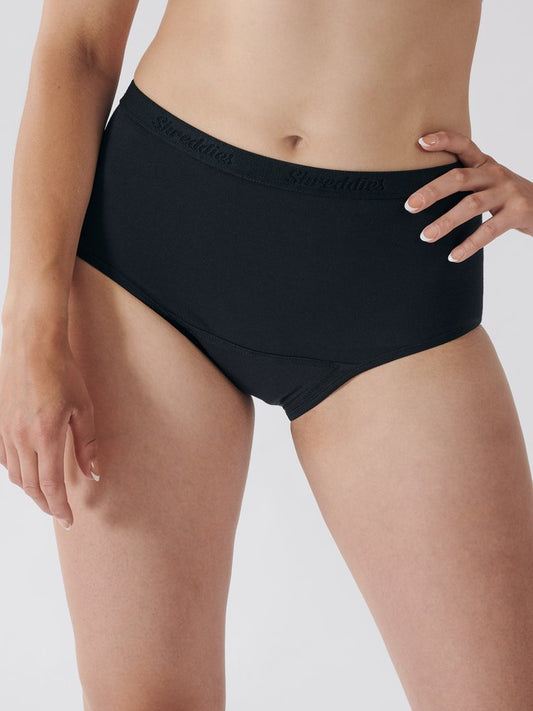
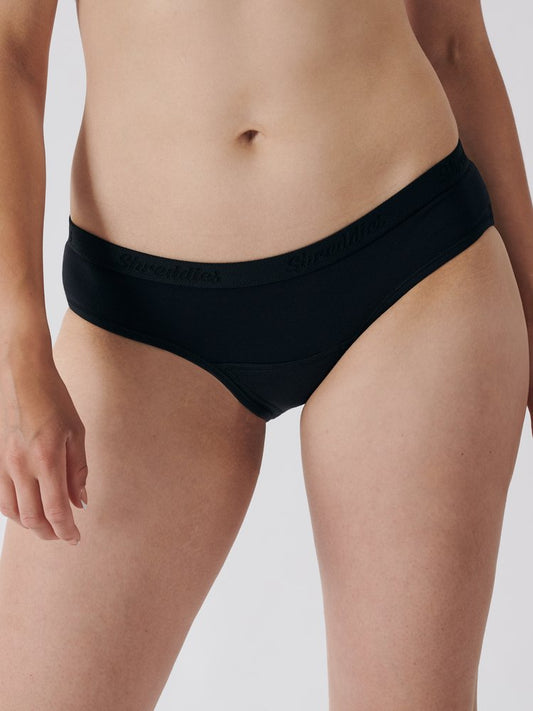
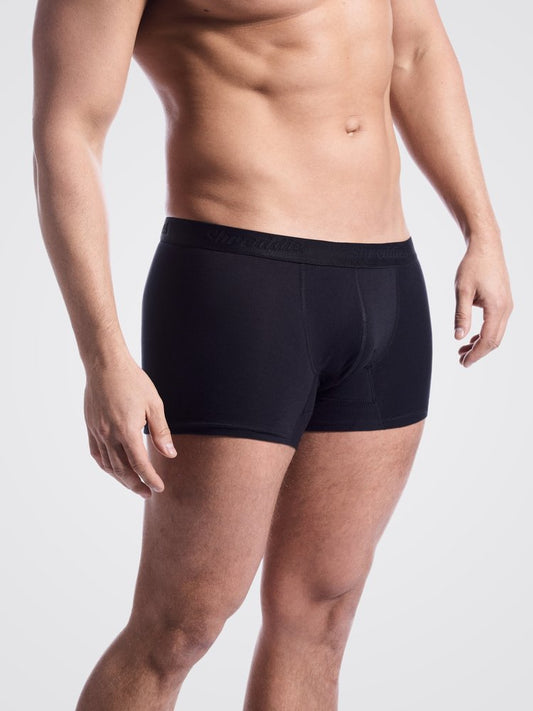
Shreddies USA offers a full women's range — hi-waist briefs and bikini briefs — built from soft, breathable fabric that works for everyday wear, not just bad days. Men's styles are available too.

Endo belly demands enough mental energy already. The constant background worry about whether the gas odor is going to become a problem adds an exhausting layer on top. Shreddies take that specific concern off the table — so you can focus on managing a chronic condition, not second-guessing your digestive system.
Let it rip. Our underwear handles the rest.
SHOP THE BEST UNDERWEAR FOR ENDO BELLY
Frequently Asked Questions About Endo Belly
Does endo belly only happen around my period?
Not necessarily. Endo belly often worsens in the days leading up to menstruation — when inflammation and hormonal fluctuations peak — but it can occur at any point in the cycle. Many women experience symptoms throughout the month, with flare frequency varying from cycle to cycle. If your bloating is strictly premenstrual and resolves quickly after your period starts, it may be PMS-related, but a gynecological evaluation is the only way to know for certain.
Can endo belly go away on its own?
For most women, endo belly doesn't resolve without addressing the underlying endometriosis. Dietary adjustments can reduce the severity of individual flares, but because the root cause is an inflammatory disease process rather than a dietary one, symptoms typically persist and often worsen without treatment. Hormonal therapies and, in some cases, surgery can significantly reduce frequency and intensity.
Is the gas from endo belly different from regular gas?
Endo belly gas involves the same basic processes — bacterial fermentation, swallowed air, altered gut motility — but the scale is different. The inflammation and nerve sensitization associated with endometriosis mean that gas that might be mildly uncomfortable in someone without the condition can be genuinely painful. Bowel involvement also affects how efficiently gas moves through the digestive tract, leading to accumulation and distension beyond ordinary flatulence.
Should I try a low-FODMAP diet for endo belly?
Low-FODMAP eating is one of the better-evidenced dietary interventions for endometriosis-related digestive symptoms and is worth discussing with your doctor or a registered dietitian. It reduces the types of carbohydrates that feed gas-producing bacteria in the colon, taking some pressure off an already-inflamed digestive system. It won't address the underlying disease, but it can reduce the severity and frequency of flares. The standard approach is a short elimination phase followed by careful reintroduction to identify individual triggers.
Can Shreddies help with the gas and odor from endo belly?
Yes. Shreddies' activated carbon cloth technology neutralizes flatulence odors regardless of their cause — whether ordinary dietary gas or the unpredictable flatulence that comes with an endo belly flare. Because the filter works at the point where gas exits the body, it handles odor consistently, providing confidence on flare days when digestive symptoms are outside your direct control. For women already managing a demanding chronic condition, having one fewer thing to worry about in public and professional settings matters.
Disclaimer
The information in this article is intended for general educational and informational purposes only. It does not constitute medical advice and should not be used as a substitute for professional medical consultation, diagnosis, or treatment. Endometriosis is a complex medical condition that requires evaluation and management by a qualified healthcare provider.
If you are experiencing severe, persistent, or worsening bloating, pelvic pain, or other symptoms that may indicate endometriosis or another medical condition, please consult a doctor or specialist. Individual experiences with endometriosis vary widely, and treatment outcomes depend on many factors specific to each person's situation.