Gallbladder Removal and Gas: What to Expect and How to Prepare
Most people don't think much about their gallbladder. It's a small, pear-shaped organ tucked under the liver, quietly doing its job while life goes on around it. Then one day it makes itself impossible to ignore with gallstones, inflammation, or chronic pain that turns every meal into a gamble. Your surgeon explains the situation. The gallbladder has to go.
Cholecystectomy is one of the most common surgical procedures in the United States, with roughly 700,000 performed every year. The procedure is generally routine. The recovery? Also manageable, but nobody warned you that your digestive system was about to stage a rebellion.
Gas. Bloating. Unpredictable bowel movements. Odors that arrive without warning. These are the post-surgical realities your discharge paperwork glosses over in polite clinical language. This guide fills that gap with honesty and zero euphemisms so you know what's coming, why it's happening, and how to get through it with your dignity intact.
What Your Gallbladder Actually Did (And Why Your Body Misses It)
Understanding post-surgical gas starts with understanding what the gallbladder was actually doing for you all those years.
Your liver continuously produces bile, a digestive fluid that breaks down dietary fats so your body can absorb them. Before surgery, your gallbladder acted as a sophisticated storage reservoir for that bile. When you ate a meal, particularly a fatty one, your gallbladder received a chemical signal and released a concentrated burst of bile into your small intestine at exactly the right moment, in exactly the right amount to handle what you'd just eaten.
It was a precision operation. Eat a light salad, get a small measured release. Eat a plate of fettuccine alfredo, get a larger, more robust response. Your gallbladder was calibrating bile delivery to match demand, automatically, every single day, without you ever having to think about it.
After surgery, that system is gone.
Your liver doesn't stop producing bile. It just has nowhere to store it anymore. Instead of arriving in targeted bursts timed to your meals, bile now drips continuously into your small intestine around the clock, regardless of whether you're eating a double cheeseburger or nothing at all. This constant low-level bile flow is enough to handle small, low-fat meals reasonably well. It is absolutely not equipped to handle large, fatty meals the way your gallbladder was.
The result: fat digestion becomes seriously difficult for a while. Undigested or partially digested food reaches your colon, where your gut bacteria greet it like an all-you-can-eat buffet, fermenting it enthusiastically and producing substantial quantities of gas in the process. Hydrogen, methane, carbon dioxide, and the whole aromatic lineup.
This is not a malfunction. It is your digestive system adapting to a new operating reality. It just takes time, and in the meantime, things can get uncomfortable, even a bit embarrassing.
Why Gas Gets So Much Worse After Gallbladder Removal
The fat digestion issue is the biggest driver of post-cholecystectomy gas, but it's not working alone. Several compounding factors are making things worse simultaneously.
Laparoscopic CO₂ Residue
If your surgery was performed laparoscopically, which is the case for the vast majority of cholecystectomies, your surgeon inflated your abdominal cavity with carbon dioxide gas to create working space. Most of this CO₂ is removed at the end of the procedure, but residual gas remains trapped in your abdominal cavity afterward. This has nothing to do with your digestive tract; it's literally gas between your organs and your abdominal wall.
This residual CO₂ is responsible for the notorious referred shoulder pain that surprises many post-surgical patients — the gas puts pressure on the diaphragm, which shares nerve pathways with the shoulder. It typically resolves within 24–72 hours as your body reabsorbs the gas, but in the immediate post-surgical period, it's a significant contributor to overall discomfort and the sensation of being unbearably full and bloated.
Altered Fat Absorption
With bile arriving in a trickle rather than a flood, your small intestine struggles to fully process high-fat foods. Fat molecules that aren't properly emulsified by bile pass through to the large intestine, where bacteria ferment them. This bacterial fermentation is the primary engine of post-cholecystectomy gas production, and it can generate an impressive volume, particularly in the weeks immediately following surgery.
Gut Bacteria Disruption
Surgery, anesthesia, antibiotics, and pain medications all affect your intestinal microbiota. Anesthesia temporarily halts digestive motility; antibiotics eliminate beneficial bacteria alongside harmful ones; opioid pain relievers compress gut transit dramatically, creating conditions where food ferments longer and more thoroughly than normal. The result is a bacterial ecosystem producing more gas than usual while it gradually restabilizes.
Post-Cholecystectomy Syndrome
A subset of patients, estimated between 10 and 15 percent, experience persistent digestive symptoms well beyond the initial recovery window. This cluster of symptoms, known as post-cholecystectomy syndrome, can include ongoing gas, bloating, diarrhea, and abdominal cramping lasting months or, in some cases, years. In most cases, it's manageable with dietary adjustments, but it's worth knowing exists so you can advocate for appropriate follow-up care if your symptoms don't improve on a reasonable timeline.
What to Expect: A Timeline of Your Gassy Recovery
Recovery from gallbladder removal isn't a light switch — it's a gradual process with distinct phases, each with its own challenges.
Days 1–5: The Immediate Aftermath
The first few days post-surgery are dominated by the CO₂ residue and the general shock of having had abdominal surgery. Bloating is significant. Discomfort is real. Movement, and even something as simple as walking to the bathroom, feels like more effort than it should.
At this stage, your digestive system is in minimal-operation mode. Hospitals typically advance you from clear liquids to soft foods over this period, keeping digestive demand low while your body focuses on healing. Gas is present but secondary to the overall surgical recovery. Follow your care team's dietary guidance precisely here; this is not the moment to test your post-surgical stomach with a pepperoni pizza.
Weeks 1–3: The Adjustment Phase Begins
As you move to solid foods and your surgical pain recedes, the dietary-driven gas phase begins in earnest. This is the window where most patients experience the sharpest digestive disruption. Fat digestion is at its most compromised, gut bacteria are still restabilizing, and your intestines are actively learning to work without the gallbladder's coordination.
Meals that would have been unremarkable before surgery can now produce startling amounts of gas and urgency. High-fat foods, fried foods, and large portion sizes are the most reliable triggers. You may also find that foods you never previously associated with digestive trouble, including dairy, cruciferous vegetables, and high-fiber whole grains, are now causing issues as well.
This phase is the most socially challenging and the most likely to catch people off guard. Understanding that it's normal and temporary makes it considerably easier to manage.
Weeks 4–8: Gradual Stabilization
For most patients, symptoms begin improving meaningfully by weeks four to six. Your liver gradually adapts its bile production patterns, your gut bacteria restabilize, and your intestines become more efficient at handling the continuous bile flow. You'll likely find you can reintroduce foods that were problematic in weeks one through three, though typically in smaller quantities and with more attention to fat content than before.
Progress during this phase is rarely linear. You'll have good days that make you optimistic and bad days that make you wonder if anything is actually improving. Both are normal. Track your food intake and symptoms loosely during this period — patterns will emerge that help you identify your specific trigger foods.
3–6 Months: The New Normal
The majority of cholecystectomy patients reach meaningful digestive stability between three and six months post-surgery. For most people, this means being able to eat a fairly normal diet with some ongoing attention to portion sizes and fat content at any one sitting. The days of a single high-fat meal derailing your afternoon are largely behind you by this point.
A minority of patients continue experiencing symptoms beyond six months. If you're in that group, targeted dietary adjustments, soluble fiber supplementation, and consultation with a gastroenterologist about bile acid management options are all worth exploring.

Foods That Fan the Flames (And What to Eat Instead)
Diet is your most powerful lever during post-cholecystectomy recovery. What you eat in the weeks following surgery will either accelerate your adaptation or extend your discomfort considerably.
The High-Priority Avoid List
In the first four to six weeks after surgery, these foods are reliably problematic for the majority of patients:
Fried and high-fat foods are the most significant triggers, including French fries, fried chicken, full-fat dairy products, fatty cuts of meat, heavy cream sauces, and anything that's been deep-fried. Without your gallbladder's ability to deliver concentrated bile on demand, your small intestine simply cannot process large fat loads effectively.
Cruciferous vegetables, including broccoli, cauliflower, Brussels sprouts, and cabbage, contain sulfur compounds and fermentable fibers that produce gas in healthy digestive systems. In a post-cholecystectomy digestive system that's already running below capacity, they can trigger outsized responses. This doesn't mean they're off-limits forever, but early recovery is the wrong time to discover you've eaten a pound of roasted Brussels sprouts.
Carbonated beverages introduce gas directly into a digestive system that is already producing more than enough of its own. Skip them entirely in the early weeks.
Dairy products become more problematic for some people after surgery, even those who had no previous lactose sensitivity. The fat content in full-fat dairy is one issue; changes in gut bacteria populations can temporarily reduce lactase enzyme production as well.
Spicy foods and caffeine can stimulate intestinal motility and worsen diarrhea and urgency in the early recovery phase.
What Actually Helps
The approach that consistently produces the best outcomes centers on smaller, more frequent meals rather than fewer large ones. Five or six smaller eating occasions spread through the day keep the fat load per sitting low and prevent your small intestine from being overwhelmed.
Low-fat proteins are your allies: chicken breast, white fish, egg whites, tofu, and legumes in modest portions.
Soluble fiber from oats, bananas, and cooked carrots helps regulate transit time without the fermentation drama of insoluble fiber.
Stay patient with dietary expansion and reintroduce foods one at a time to identify your specific trigger profile rather than guessing.
Beyond Diet: Lifestyle Adjustments That Actually Help
What you eat matters enormously, but how you live during recovery matters too.
Movement is medicine.
Gentle walking stimulates intestinal motility and helps move trapped gas through your system. Most patients are encouraged to begin brief walking within 24 hours of a laparoscopic procedure. Don't lie still when walking is tolerable; stillness is not your friend when gas is your problem.
Eating pace directly affects gas production.
Eating quickly causes you to swallow significantly more air and sends larger food particles to your colon for bacteria to ferment. Slow down deliberately while your digestive system is still adapting.
Heat application.
A warm pad on your abdomen relaxes intestinal muscles and takes the edge off trapped gas discomfort without resolving the underlying production.
Positioning matters.
Lying flat immediately after eating slows gastric emptying and increases fermentation time. Stay upright for at least 30 minutes after meals.
When to contact your care team: Fever, worsening abdominal pain, jaundice, or symptoms that show no improvement after several weeks warrant a conversation with your surgeon or gastroenterologist.

Shreddies: Recover from Gallbladder Surgery with Confidence While Your Gut Figures Itself Out
Here's the thing nobody puts in the surgical discharge paperwork: post-cholecystectomy gas isn't just physically uncomfortable.
It's socially destabilizing in ways that catch people completely off guard.
You've followed the dietary guidelines. You've eaten six small meals. You've avoided fried food for three weeks. And then, at your first dinner out since surgery, your still-adapting digestive system decides that right now is the moment to make itself known to everyone at the table.
This is where Shreddies USA enters the picture as the recovery tool your discharge paperwork forgot to mention.

What Are Shreddies?
Shreddies are odor-filtering underwear engineered around Zorflex — an activated carbon cloth originally developed for military and industrial chemical filtration. Shreddies adapted this technology into comfortable, normal-looking underwear for men and women with one clear purpose: to eliminate flatulence odor entirely before it becomes anyone else's problem.
The activated carbon works through adsorption. Odor molecules are captured and locked within the carbon structure rather than escaping. The filtration neutralizes odors at up to 200 times the concentration of what the average person produces, and the filter reactivates through washing, maintaining effectiveness for 50 or more cycles. This is not a scented product masking one smell with another. It's a functional filtration system built into everyday underwear that looks and feels like any other pair.
The Zorflex technology has been independently validated by De Montfort University. The effectiveness of activated carbon filtration for flatulence odor management is documented in the American Journal of Gastroenterology, and Shreddies has been recognized with the ACA Look Good, Feel Good award — because confidence and quality of life are clinical outcomes too.
Why the Post-Surgical Window Is Exactly When You Need This
The hardest part of post-cholecystectomy gas isn't the physical sensation. It's that you can't schedule it.
You can do everything right and still get ambushed. That background awareness of what might happen, and more importantly when, is exhausting during a recovery period when your energy should be directed toward healing, not performing digestive surveillance on yourself.
The anxiety is also self-reinforcing. Stress demonstrably worsens gut motility and gas production. Worrying about gas makes more gas. The cycle is as real as it is irritating.
Shreddies don't stop the gas. Your body needs to produce it as part of the adaptation process, and suppressing that would be counterproductive. What they remove is the social consequence of it.
Your body is doing what it's supposed to do, and your job is to give it the conditions to do it without also managing everyone else's reaction to it.
Gallbladder Recovery Situations Where Shreddies Help the Most
Your first restaurant outing post-surgery.
The celebratory dinner your family organized should stay celebratory. Shreddies make sure it does.
Hosting at home during recovery.
Cooking for others while your own gut is still in its adjustment phase is a specific kind of stressful. Wearing Shreddies in your own kitchen lets you focus on the food you're serving rather than the gas you might be producing.
Supermarket runs and errand days.
Getting through ordinary errands in early recovery is already an effort. Shreddies take the digestive anxiety out of a routine grocery run so you're conserving that energy for actual recovery.
Returning to the office.
Whether you're back in person or on video calls with housemates nearby, the dimension of post-surgical gas becomes a non-issue.
Post-surgical follow-up appointments.
Doctors' waiting rooms are small, the chairs are close together, and you're typically sitting for longer than you'd like while your digestive system operates on its own agenda. Having Shreddies on means the waiting room stays comfortable for everyone, including the stranger sitting twelve inches away from you.
POST-SURGICAL CONFIDENCE IS PRICELESS
Get Yours Today

Shreddies USA features two comfortable styles for men, including hipster and boxer-style support underwear.

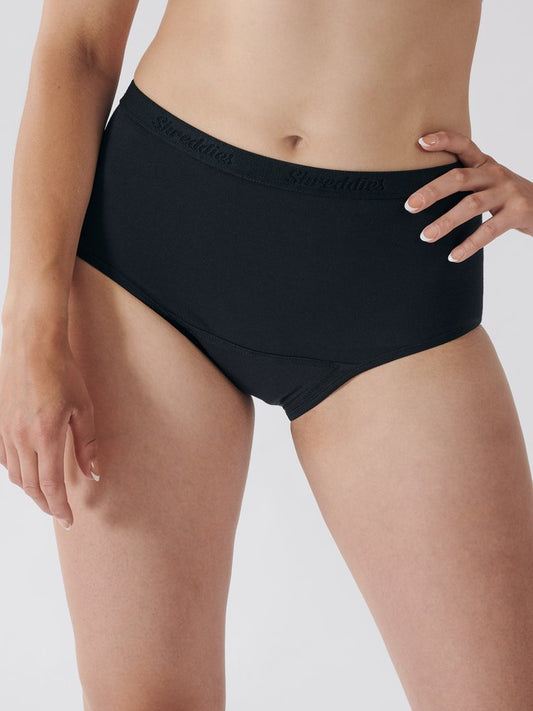
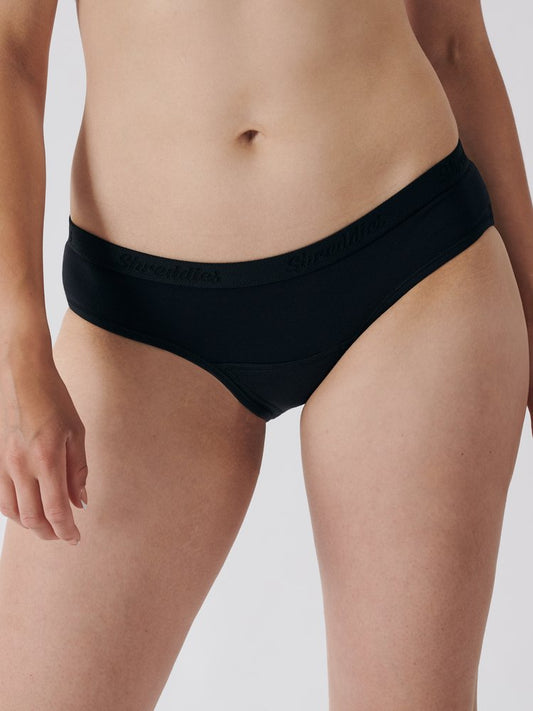
Shreddies USA features two comfortable styles for women, including high-waist underwear and bikini briefs. Reduce the stress and worry after surgery today.
FAQ: Gallbladder Removal and Gas
How long will gas and bloating last after gallbladder removal?
For most patients, the most significant gas symptoms occur in the first three to six weeks after surgery and improve substantially by weeks six to eight. Full digestive stabilization typically takes three to six months. A minority of patients experience longer-lasting symptoms consistent with post-cholecystectomy syndrome, which warrants follow-up with a gastroenterologist.
Is it normal to have more gas after gallbladder surgery than before?
Yes, and it's one of the most common complaints in the weeks following cholecystectomy. The shift from concentrated, on-demand bile release to continuous bile drip changes how your small intestine handles fats, and the resulting incomplete fat digestion produces significant gas through bacterial fermentation in the colon. It improves as your body adapts.
Why does gallbladder removal cause diarrhea as well as gas?
Continuous bile flow into the small intestine, rather than the calibrated bursts your gallbladder provided, can have a mild laxative effect. Bile salts reaching the colon in excess stimulate fluid secretion and speed up transit, resulting in looser stools and urgency alongside increased gas production. Reducing dietary fat and eating smaller, more frequent meals helps manage both symptoms.
Which foods should I absolutely avoid in the first month after gallbladder removal?
Prioritize avoiding high-fat and fried foods, full-fat dairy, carbonated beverages, cruciferous vegetables in large quantities, spicy foods, and caffeine during the first four to six weeks. Reintroduce foods gradually and one at a time so you can identify your personal trigger profile rather than relying entirely on general guidance.
Can I use Shreddies underwear during post-surgical recovery?
Yes, Shreddies are built for all-day wear and fit naturally into post-cholecystectomy recovery from the point your care team clears you for normal activity. The weeks two through eight window is when they're most valuable: dietary-driven gas is at its most unpredictable, and the social cost of that unpredictability is highest.
Does gas after gallbladder removal ever go away completely?
For the majority of patients, yes. Most people return to a near-normal digestive baseline within three to six months of surgery, with ongoing modest attention to fat content per meal. Some patients find they maintain a slightly higher baseline gas production than before surgery, manageable through continued dietary awareness. A smaller subset experience persistent post-cholecystectomy syndrome requiring more structured management.
When should I contact my doctor about gas after gallbladder removal?
Contact your surgical team or primary care provider if your gas is accompanied by fever, worsening abdominal pain that isn't improving over time, jaundice, significant weight loss, or symptoms that show no improvement after two months of dietary management. These may indicate bile duct complications, post-cholecystectomy syndrome, or other issues that warrant evaluation.
Disclaimer
This article is intended for general informational and educational purposes only and does not constitute medical advice, diagnosis, or treatment. Post-cholecystectomy recovery varies significantly between individuals based on factors including surgical approach, overall health, age, pre-existing digestive conditions, and individual physiology.
All dietary, lifestyle, and recovery decisions following gallbladder removal surgery should be made in consultation with your surgeon, primary care provider, or a qualified gastroenterologist. Do not disregard professional medical advice or delay seeking it based on information in this article. If you are experiencing symptoms that concern you following surgery, contact your healthcare team promptly.
Information about Shreddies USA products is included for informational purposes and does not constitute a medical recommendation. These products may assist with managing practical quality-of-life concerns during recovery but do not treat underlying medical conditions or replace any prescribed medical care.