Gas After Laparoscopic Surgery: Beat the Bloat Before It Starts
You've got a laparoscopic surgery coming up. The pre-op checklist is underway, the date is circled on the calendar, and you're doing what any sensible person does in this situation: researching what recovery is actually going to feel like, so it doesn't blindside you.
Smart move. Because there's one post-operative side effect that catches nearly every laparoscopic patient off guard — not because it's rare, but because nobody thinks to mention it before the procedure. It's not pain at the incision site. It's not nausea from the anesthesia. It's gas. A lot of it. Persistent, unpredictable, and thoroughly undignified flatulence that your body is going to produce on its own schedule, regardless of who's in the room.
The good news: it's temporary, it's normal, and it's entirely manageable — especially if you know what's coming and prepare before you go in. This guide covers everything you need to know about post-laparoscopic gas before your surgery date: what causes it, what it feels like, how long it lasts, and what to have ready on day one so recovery is as comfortable and as dignified as possible.
What Is Laparoscopic Surgery, Exactly?
Laparoscopic surgery — also called keyhole surgery or minimally invasive surgery — allows surgeons to operate through a series of very small incisions, typically less than half an inch each, rather than a single large opening.
A thin camera called a laparoscope threads through one incision and transmits a magnified view of the surgical site to a monitor, while specialized instruments enter through the remaining incisions to carry out the procedure.
Gallbladder removal (cholecystectomy) is one of the most common laparoscopic procedures. But appendectomies, hernia repairs, hysterectomies, endometriosis treatment, bariatric surgeries, colon resections, ovarian cyst removal, and a growing range of other procedures are all routinely done this way. The advantages are real and significant: less tissue damage, reduced blood loss, lower infection risk, shorter hospital stays, and faster recovery. What once took four to six weeks of recovery can sometimes be measured in days.
There is, however, one trade-off that tends to get underplayed in the pre-op conversation. To give the surgeon enough space to see and maneuver, the abdominal cavity needs to be inflated. And the substance used to do the inflating is carbon dioxide gas. That detail — and everything that follows from it — is the reason you're reading this guide right now.
The CO2 Factor: Why You'll Have So Much Gas After Surgery
Carbon dioxide is the workhorse of laparoscopic surgery, and the choice isn't arbitrary. Surgeons need working space between abdominal organs that, at rest, sit quite close together. The solution is pneumoperitoneum — inflating the abdominal cavity with gas to create an operational workspace. CO2 is the gas of choice because it's non-flammable (critical when electrical surgical instruments are in use), rapidly absorbed by the body's tissues, and not toxic in the quantities used.
Once the procedure is complete, the surgical team evacuates as much CO2 as possible before closing the incisions. Here's where the post-operative experience begins: as much as possible is not the same as all of it. Some CO2 always remains — tucked into pockets around organs, pooled beneath the diaphragm, in spaces the evacuation process can't fully reach.
That residual gas doesn't disappear immediately. Your body absorbs it gradually through tissue and the bloodstream — a process that takes anywhere from a few hours to a few days. In the meantime, it makes its presence very much known. Knowing this before surgery removes the alarm factor entirely. You won't wake up wondering what's wrong. You'll know exactly what's happening and why.
What Post-Surgical Gas Actually Feels Like
Post-surgical gas after laparoscopic procedures presents in two distinct and often simultaneous ways. Understanding both before your surgery means neither will catch you off guard.
Abdominal Bloating and Flatulence
The trapped CO2 creates pressure throughout the abdominal cavity, causing visible bloating and a sensation of tightness or fullness that has nothing to do with what you've eaten. Your abdomen may look swollen and feel drum-tight — ranging from mildly uncomfortable to acutely painful depending on the procedure and the volume of CO2 used. As the gas shifts and the gut reactivates, you'll experience cramping, gurgling, and flatulence. This is normal and a good sign. Things are moving.
The flatulence specifically is worth noting: it's involuntary, it's frequent, and it happens regardless of what you eat or how careful you are. Your body is doing what it needs to do to process and expel residual gas. The discomfort typically peaks in the first 24 to 48 hours and gradually decreases from there.
Referred Shoulder and Neck Pain
This is the symptom that confuses nearly every laparoscopic patient who hasn't been warned about it. You may feel pain in your right shoulder, your left, or across both — sometimes extending into the neck. It can feel sharp, aching, or like a persistent pressure, and it seems entirely disconnected from the surgical site.
What's actually happening involves the phrenic nerve and the diaphragm. The diaphragm — the dome-shaped muscle separating your chest from your abdominal cavity — sits directly above the space where CO2 accumulates post-surgically. When residual gas pushes upward and irritates its underside, your body interprets the signal through the phrenic nerve, which shares pathways with the shoulder region. The result is referred pain that feels like a shoulder problem but is entirely caused by trapped gas. It typically peaks in the first 24 to 72 hours and resolves as CO2 is absorbed.
Knowing this before surgery takes all the alarm out of the experience. Shoulder pain after your laparoscopy isn't a complication. It's the CO2.
When to Be Concerned
Most post-laparoscopic gas discomfort is expected and temporary. Contact your surgical team if you experience: fever above 101°F, pain that worsens rather than improves after 72 hours, redness or discharge at incision sites, inability to keep fluids down, or a rigid and board-like abdomen. These can signal complications distinct from routine post-operative gas discomfort.
How Long Does Gas After Laparoscopic Surgery Last?
For most patients, the most intense gas discomfort resolves within 24 to 72 hours — the acute phase when residual CO2 is still present in significant volume and the body is actively working to process it.
By days three to four, the majority of patients report a marked improvement. The bloating softens, referred shoulder pain diminishes or disappears, and cramping becomes less frequent. By the end of the first week, most people have moved well past the CO2-related discomfort, though mild digestive irregularity can linger a bit longer as the gut fully restarts.
The important takeaway: this discomfort has a known cause, a predictable timeline, and a definite end. Knowing that going in makes the experience of it significantly easier to move through.

Prepare for Laparoscopic Surgery with Shreddies
Here's the part of laparoscopic recovery that almost never makes it into the pre-op conversation: gas after surgery doesn't just cause discomfort. It causes embarrassment.
Your body is going to pass gas unpredictably, involuntarily, and without warning, and it's going to do this while a partner is helping you from the bedroom to the couch, in the waiting room at your first follow-up appointment, and when your first visitors show up on day three.
This is not a hypothetical. It's an ordinary part of laparoscopic recovery. And it's worth solving before surgery, not scrambling to address on day two when you're already uncomfortable and already exhausted.

The solution: order Shreddies USA before your surgery date.
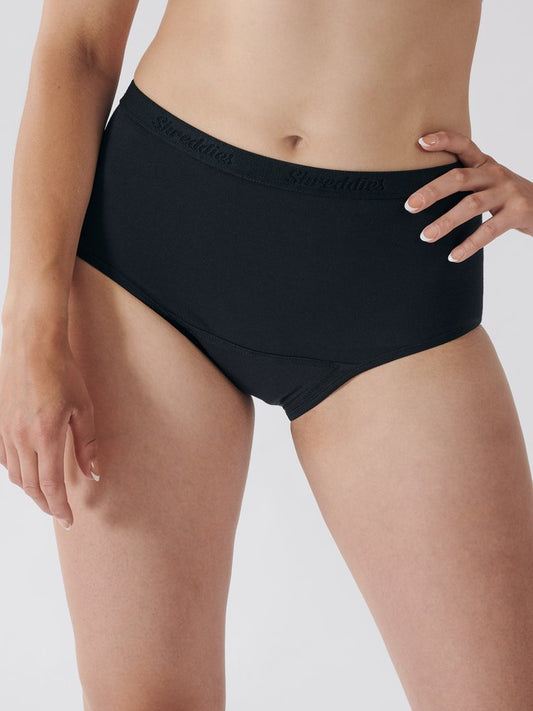
Shreddies USA sells the world's first odor-filtering underwear — patented garments built around Zorflex activated carbon cloth technology that absorbs and neutralizes flatulence odors before they escape into the environment. Not masks them. Not delays them. Eliminates them.
The science backs it up. Research published in the American Journal of Gastroenterology identified activated carbon underwear as the most effective method for removing flatulence odors. Independent testing by De Montfort University, presented at the 86th Textile Institute World Conference, found that the Zorflex fabric filters odors up to 200 times the strength of the average flatus emission. Shreddies look and feel like regular underwear — comfortable, discreet, and completely invisible to everyone around you.
Shreddies are available for both men and women: men's hipster style and support boxer style; women's bikini brief and hi-waist brief.


Why order Shreddies before surgery?
The CO2 recovery window — typically days one through five — is when gas is most unpredictable and least controllable. If you wait until after surgery to think about this, you're ordering from a couch in discomfort, waiting for delivery while the most active phase of recovery is underway. Order before you go in, and Shreddies are waiting for you when you get home.
A few scenarios that are entirely ordinary during laparoscopic recovery — and entirely covered by Shreddies:
* Day one at home. Your partner is helping you move around. You're already feeling vulnerable. The last thing you need is an odor compounding the afternoon.
* Your first follow-up appointment. Twenty minutes in the car, then a waiting room. Enclosed spaces, residual CO2, limited mobility. A non-event with Shreddies.
* First visitors. Friends check in on day three post-op. Your digestive system expresses its own opinions about the visit. You focus on the conversation.
* First day back at work. Whether you're on a video call from home or back at a desk, the unpredictable gas of early return-to-work is handled.
The Shreddies philosophy is simple: when odor isn't a variable, your energy goes toward getting better rather than monitoring the room. Recovery feels lighter when you're not calculating social risk into every interaction.
SHOP SHREDDIES AND BE PREPARED FOR SURGERY
Your Pre-Op Preparation Checklist for Gas Recovery
Beyond ordering Shreddies, a few practical steps before surgery will make your recovery meaningfully more comfortable:
Stock the kitchen.
In the first three to five days, you'll want easy-to-digest foods ready to go: broths, soups, cooked grains, plain crackers, scrambled eggs, cooked vegetables, ginger tea. You won't want to be making grocery decisions from a bloated couch.
Pick up simethicone.
Gas-X and similar over-the-counter simethicone products help coalesce gas bubbles in the digestive tract, making them easier to eliminate. Check with your surgical team first, but it's generally considered safe post-operatively and frequently recommended. Having it on hand from day one saves a trip.
Set up your recovery space.
You'll want access to extra pillows — propping yourself slightly upright reduces the upward pressure of CO2 on the diaphragm and can noticeably ease shoulder discomfort at night. A heating pad on the abdomen helps too. Set this up before surgery.
Plan your movement.
Walking is the single most effective way to help your body process residual CO2. You don't need to plan anything ambitious — just know that short circuits around the house, starting within hours of getting home, genuinely accelerate recovery. Having a clear, clutter-free path to walk matters more than it sounds when you're post-op.
Have peppermint tea ready.
Peppermint has antispasmodic properties that reduce intestinal cramping and help relax the smooth muscle of the GI tract, making it easier for gas to move through. Unsweetened peppermint tea is gentle on a stomach still settling from anesthesia.
8 Ways to Relieve Gas After Laparoscopic Surgery
Once you're home and recovering, these approaches actively accelerate the process and reduce discomfort in the meantime.
1. Walk Early and Often
Gentle ambulation is the single most effective intervention available to you. Movement stimulates diaphragmatic breathing, improves circulation, and encourages gas migration toward areas where it can be absorbed or expelled. Most surgeons encourage patients to start moving within hours of returning home. A slow circuit around the house is enough.
2. Change Positions Deliberately
CO2 tends to pool in the upper abdominal and subdiaphragmatic spaces when you're lying flat — which is why shoulder pain often intensifies at night. Propping yourself up with pillows, or sleeping slightly reclined, reduces upward gas pressure on the diaphragm. Alternating between sitting, standing, and lying down throughout the day prevents gas from stagnating in one spot.
3. Apply Gentle Heat
A warm heating pad placed over the abdomen relaxes abdominal wall muscles, soothes cramping, and improves local circulation — all of which aid gas absorption. Keep temperatures moderate and never apply heat directly to incision sites.
4. Try Peppermint Tea
Peppermint has antispasmodic properties that reduce intestinal cramping and help relax the smooth muscle of the GI tract, making it easier for gas to move through. Peppermint tea — unsweetened, not carbonated — is the most practical form during early recovery and is gentle on a stomach still settling from anesthesia.
5. Consider Simethicone
Over-the-counter simethicone (Gas-X and similar products) coalesces gas bubbles in the digestive tract into larger ones that are easier to eliminate. It doesn't address CO2 in the abdominal cavity directly but helps with any digestive gas that compounds the discomfort. Check with your surgical team first — it's generally considered safe post-operatively and frequently recommended.
6. Avoid Swallowing Extra Air
The last thing a pressurized post-surgical abdomen needs is more gas entering from above. Eating slowly, chewing thoroughly, avoiding straws, and skipping carbonated beverages all reduce air entering the digestive tract. Skip chewing gum during the recovery window too.
7. Practice Deep Diaphragmatic Breathing
Slow, deep belly breathing actively moves the diaphragm up and down, helping dislodge CO2 pooled beneath it and encouraging absorption into the bloodstream. Five minutes of intentional deep breathing several times a day can make a meaningful difference — and the relaxation response it triggers helps ease abdominal muscle tension that amplifies discomfort.
8. Stay Ahead of Constipation
Anesthesia and post-surgical pain medications are well-known for slowing gut motility. When stool stagnates in the colon, bacterial fermentation adds a secondary layer of gas on top of the CO2 discomfort. Staying hydrated, moving as tolerated, and asking about stool softeners if needed keeps this compounding problem at bay.
Foods to Avoid (and Favor) Right After Surgery
The immediate post-laparoscopic window calls for specific dietary choices — not general gas management, but a deliberate effort to minimize digestive burden while CO2 is still dissipating and gut motility is reestablishing itself.
Give these a wide berth for the first three to five days: beans and lentils, cruciferous vegetables (broccoli, cabbage, cauliflower, Brussels sprouts), raw onions and garlic, carbonated drinks, fried or high-fat foods, and highly processed snacks. Dairy can be problematic too, particularly if you have any lactose sensitivity, since the gut is less efficient at digestion during recovery. Alcohol should be avoided entirely — it irritates the gastric lining and interacts poorly with anesthesia metabolites.
Lean toward: broths and soups, plain crackers and toast, cooked grains like rice or oatmeal, scrambled eggs, and cooked vegetables. Ginger in any form — ginger tea, flat ginger ale, ginger broth — has well-documented anti-nausea and pro-motility properties that actively support gut recovery. Staying well hydrated with water, herbal teas, and clear fluids helps maintain the tissue perfusion that accelerates CO2 absorption.
Most laparoscopic patients are back to eating normally within a week to ten days, adjusted for any dietary restrictions specific to their procedure.
FAQs: Gas After Laparoscopic Surgery
Is gas after laparoscopic surgery normal?
Completely. It's one of the most universal side effects of the procedure, occurring because carbon dioxide is used to inflate the abdominal cavity during surgery and some always remains afterward. Abdominal bloating, cramping, and flatulence in the days following surgery are entirely expected parts of recovery, not signs that something went wrong.
Why does my shoulder hurt after laparoscopic surgery?
Shoulder pain after laparoscopic surgery is a well-documented phenomenon called referred pain. Residual CO2 rises and presses against the underside of the diaphragm. Because the diaphragm shares nerve pathways with the shoulder region via the phrenic nerve, the brain interprets this as shoulder pain even though the source is abdominal. It's disconcerting but normal, and it resolves as CO2 is absorbed — typically within 24 to 72 hours.
How long does bloating last after laparoscopic surgery?
CO2-related bloating typically peaks in the first 24 to 48 hours. By days three to four, most patients notice a marked improvement. Full resolution of gas-related discomfort generally occurs within the first week, though individual timelines vary by procedure and activity level.
Can I use Gas-X (simethicone) after laparoscopic surgery?
Simethicone is generally considered safe after laparoscopic surgery and is frequently recommended for post-operative gas discomfort. It doesn't address CO2 in the abdominal cavity directly but helps with accompanying digestive gas. Always confirm with your surgical team before adding any over-the-counter products to your recovery routine.
What should I eat in the first few days after laparoscopic surgery?
Focus on warm, easy-to-digest foods: broths, soups, cooked grains, plain crackers, scrambled eggs, and cooked vegetables. Avoid gas-generating foods, carbonated beverages, fried foods, and alcohol. Staying well hydrated supports both gut recovery and CO2 absorption.
Can Shreddies help with odor from gas after laparoscopic surgery?
Yes — and ordering before surgery means they're ready on day one when the gas is most unpredictable. Shreddies USA's activated carbon cloth technology neutralizes odor-causing gas molecules on contact, eliminating flatulence odors rather than masking them. For the post-laparoscopic recovery window — when gas output is beyond voluntary control — Shreddies provide complete odor coverage that lets you focus on getting better rather than managing the social fallout.
When should I call my surgeon about gas pain after laparoscopic surgery?
Call your surgical team if you experience: fever above 101°F, pain that worsens beyond 72 hours post-surgery, redness or discharge at incision sites, inability to pass gas or have a bowel movement after several days, persistent vomiting that prevents fluid intake, or a rigid and board-like abdomen. These warrant prompt evaluation and are distinct from ordinary post-operative gas discomfort.
Disclaimer
This article is intended for general informational and educational purposes only and does not constitute medical advice. Every individual's surgical experience, recovery timeline, and post-operative needs are different. Always follow the specific post-operative instructions provided by your surgical team, and consult your healthcare provider with any questions or concerns about your recovery. If you experience symptoms that concern you following laparoscopic surgery, seek medical attention promptly rather than relying on general guidance.
Information about Shreddies USA products is provided for informational purposes only and is not intended as medical advice. Shreddies products are designed to manage flatulence odors and do not treat, prevent, or cure any medical condition. Individual experiences with these products may vary.