Women's Best Underwear for Bloating and Gas: Real Solutions Guide
Let’s get something out of the way immediately: every woman farts. Every. Single. One.
The CEO closing the billion-dollar deal. The yoga instructor in warrior pose. Your grandmother at Sunday dinner. Gas is not a character flaw or a sign that your digestive system has gone rogue. It is a completely normal biological process that the average person experiences between 13 and 21 times per day.
And yet. Here we are, clenching through board meetings, speed-walking away from coworkers in open-plan offices, and quietly declining certain foods at restaurants because the aftermath simply isn’t worth the social risk.
The truth is that women are disproportionately affected by bloating and gas — thanks to a combination of hormonal fluctuations, gut biology, and a digestive system that is, frankly, keeping a very full calendar. Managing it well starts from the inside out, literally. And that means thinking strategically about everything, including what you are wearing closest to your body.
This is your comprehensive guide to understanding why bloating and gas affect women so intensely, what you can realistically do about it, and why choosing the right underwear — the women’s best underwear for bloating and gas — can genuinely change how you move through your day.
Why Women Experience More Bloating and Gas Than They’re Led to Believe
Here is a fun fact that is not actually that fun when you are living it: women’s digestive systems operate differently from men’s, and the deck is somewhat stacked against us.
Gastric emptying.
The rate at which food moves from the stomach into the small intestine — is measurably slower in women. Slower transit means more fermentation, more gas production, and more bloating. Thanks, biology.
Then there are the hormones.
Progesterone, which rises significantly during the second half of the menstrual cycle, causes smooth muscle relaxation throughout the body — including the gastrointestinal tract. The practical result is that everything slows down even further, gas accumulates, and the days leading up to a period can feel like your abdomen has quietly declared itself an independent republic.
Estrogen has a role to play too.
The gut is lined with estrogen receptors, which means that fluctuations across the menstrual cycle, into perimenopause, and through menopause have a very direct pipeline to digestive behavior. Women with conditions like irritable bowel syndrome — which affects women at roughly twice the rate of men — often find that their symptoms follow a hormonal pattern as reliably as a calendar.
There is also the matter of gut microbiome composition.
Research suggests the bacteria living in the digestive tract differ between sexes, influencing how food is fermented, how much gas is produced, and even the types of gas compounds generated. Some are odorless. Others, particularly sulfur-containing gases like hydrogen sulfide, are decidedly not.
The point is not to catastrophize the female digestive experience but to establish something important: this is not in your head, it is not a matter of willpower, and it is not something you did wrong. It is biology, and biology responds to the right strategies.

The Most Common Culprits Behind Women’s Bloating and Gas
Understanding what is causing the gas is genuinely useful because the triggers are not always the obvious suspects.
Yes, beans have a well-earned reputation, but the full list is considerably more varied and includes several things that are widely considered health foods.
Dietary Triggers
FODMAPs are fermentable carbohydrates found in many otherwise nutritious foods including apples, onions, garlic, wheat, and legumes. For people with a sensitive gut, these pass undigested into the large intestine where bacteria ferment them enthusiastically, producing significant gas. Cruciferous vegetables contain raffinose, a complex sugar the body cannot break down independently, leaving it as bacteria fuel in the colon. High-fiber foods, while excellent for long-term gut health, can also cause significant short-term gas, particularly when fiber intake increases suddenly.
Sugar alcohols like xylitol, sorbitol, and erythritol — common in sugar-free gum, protein bars, and low-calorie snacks — are poorly absorbed and highly fermentable. Carbonated beverages introduce gas directly into the system, and dairy products are a significant trigger for the roughly 68% of people who carry some degree of lactose intolerance.
Hormonal Causes
The luteal phase — the roughly two weeks between ovulation and menstruation — is the hormonal prime time for bloating and gas. Progesterone slows motility, estrogen fluctuations affect gut sensitivity, and water retention adds physical bloating on top of gas-related distension. Perimenopause and menopause bring longer-term hormonal volatility, and many women find that digestive symptoms they never experienced in their thirties become a consistent feature of life in their forties and fifties.
Medical Conditions
Irritable bowel syndrome, Crohn’s disease, ulcerative colitis, celiac disease, SIBO, and gastroparesis can all produce significant ongoing bloating and gas as primary symptoms. If symptoms are severe, persistent, or accompanied by pain, changes in stool consistency, or unexplained weight loss, a healthcare provider consultation is warranted.
How Bloating and Gas Affect Women’s Daily Confidence and Quality of Life
The physical discomfort of bloating and gas is one thing. The social calculus that comes with it is another thing entirely, and it is the part that rarely gets discussed with appropriate seriousness.
There is the outfit planning: the subconscious inventory of which clothes have a forgiving waistband, which fabrics do not amplify sound, and which cuts sit far enough from the body that a bloated afternoon does not announce itself visually. Many women maintain a mental category of “safe” clothes that only emerges on high-risk digestive days — a quiet but exhausting mental overhead.
There is the social pre-planning: scanning restaurant menus in advance for safer options, declining invitations where seating is confined and escape routes are limited, and the tension of long flights or important meetings where the body’s timing is entirely its own business.
And there is the more personal cost: the anxiety that builds when symptoms are unpredictable, the way constant vigilance erodes confidence over time, and the tendency to internalize a digestive issue as a personal failing rather than a physiological reality.
Research consistently links chronic digestive symptoms with elevated rates of anxiety, social isolation, and reduced quality of life. This is a rational response to a daily challenge most people face largely in silence. The goal of managing bloating and gas effectively is not just physical comfort — it is freedom: the ability to eat a meal, attend an event, or sit in a meeting without running a background risk calculation the entire time.
What to Look for in Underwear When You’re Dealing with Bloating and Gas
Not all underwear is created equal, and when digestive unpredictability is part of your daily picture, the underwear decision stops being trivial. Here is what actually matters.
Waistband Design
Constricting waistbands can exacerbate bloating by compressing an already-distended abdomen and interfering with natural gas movement. A wide, flat waistband that sits comfortably without digging in is a genuine functional consideration, not just an aesthetic one. Hi-waist styles are particularly popular among women dealing with bloating because the extended coverage provides support without the pinch point that hip-sitting styles create.
Fabric and Breathability
Breathable natural fabrics — cotton in particular — allow air circulation and reduce moisture buildup, which matters when the digestive system is working harder than usual. Tight synthetics that trap heat compound physical discomfort. Stretch matters too: a fabric with genuine four-way stretch accommodates daily bloating fluctuations without creating pressure points as the day progresses.
Cut and Coverage
The right cut is personal and situation-dependent. For workdays and longer periods of sitting, fuller coverage tends to feel more comfortable when bloating is a factor. For more active days, a secure but non-restrictive bikini style may suit better. The key variable is whether the underwear sits in a way that does not constantly remind you it is there.
Odor Management
This is the category most underwear conversations never reach. Fabric softness and waistband comfort are solvable problems. Odor is the issue that can send a person spiraling into genuine anxiety, and it is the one area where standard underwear — regardless of how thoughtfully designed it is in every other respect — offers nothing. Until recently, the answer to “what do I do about flatulence odor” was: not much. That has changed.

Meet Shreddies: The Underwear That Actually Does Something About It
Shreddies USA makes odor-filtering underwear. Full stop. No euphemisms, no delicate reframing. The brand’s motto is “Fart with confidence,” and if you are reading this article, that probably sounds like the most useful thing anyone has said to you in a while.

How Shreddies Work
The technology inside every pair of Shreddies is activated carbon cloth — a highly porous material embedded in the back panel. Activated carbon is the same material used in industrial filtration and medical applications. The porous structure captures odor-causing compounds, particularly sulfur-containing gases like hydrogen sulfide and ethyl mercaptan, before they have any opportunity to become anyone else’s problem.
The science is not theoretical. Research published in The American Journal of Gastroenterology identified activated carbon underwear as the most effective method for removing flatulence odors. Independent testing by De Montfort University found the fabric capable of filtering odors up to 200 times the strength of average flatulence. Effectiveness is not a one-time performance either — the fabric remains active for the life of the garment, reactivating with every wash.
Shreddies were awarded a ‘Look Good, Feel Good’ award from the Association for Continence Advice — recognizing products that are comfortable, attractive, and confidence-improving. The judging panel called it a “fantastic innovation.” They were not wrong.
SHOP THE WOMEN'S COLLECTION


Ultimate Protection for Women in Two Styles
Shreddies USA offers two women’s styles, both built on the same activated carbon technology and designed to look and feel like regular underwear. There is no visible indication that they do anything other than what regular underwear does, which is the entire point.
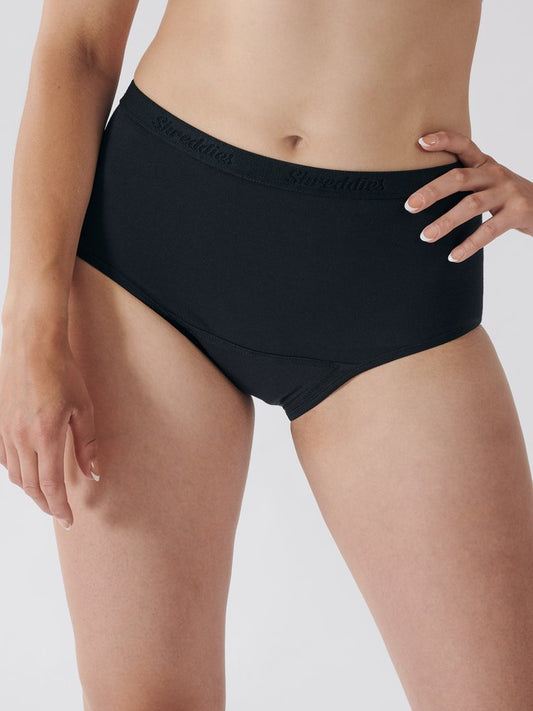
The Women’s Hi-Waist Brief sits above the hips for a classic, full-coverage fit. The extended waistline is particularly useful for women dealing with bloating because it provides comfortable abdominal coverage without constriction. For days when the digestive situation is unpredictable, this style is the workhorse of the range.
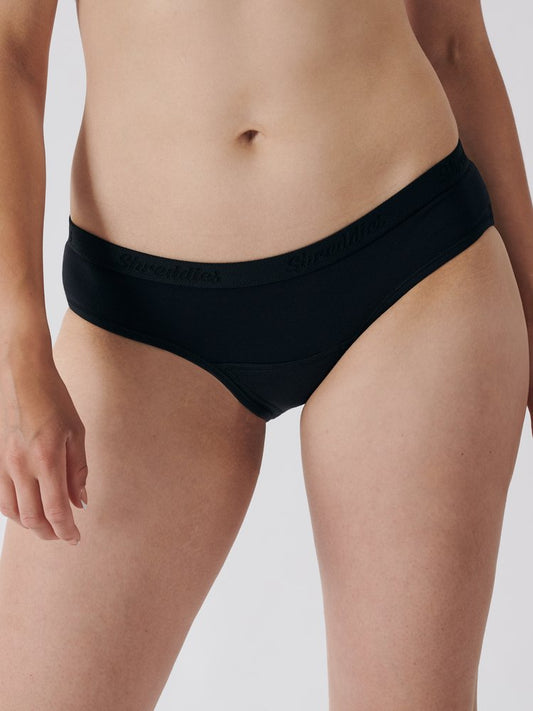
The Women’s Bikini Brief is a lower-profile cut for women who prefer a less-coverage style without sacrificing the activated carbon filtration technology. It provides the same odor-filtering performance in a lighter, more streamlined silhouette.
SHOP THE WOMEN'S COLLECTION

Why Shreddies Restore Confidence
Here is what is actually being solved when someone puts on a pair of Shreddies: not the gas itself, but the anxiety that lives alongside it.
When the odor concern is neutralized, the mental overhead of managing digestive unpredictability drops significantly. You stop calculating your seat position at every gathering. You stop editing your restaurant order around what is “safe.” You stop holding your breath — figuratively and sometimes literally — waiting for a situation to become uncomfortable.
Shreddies are designed for people managing IBS, Crohn’s disease, colitis, lactose intolerance, celiac disease, and medication side effects — conditions where gas is an involuntary ongoing symptom. They are equally useful for women navigating perimenopause and menopause, post-surgical recovery, and anyone whose digestive system simply does not always cooperate with the social calendar.
The mission of Shreddies USA is to supply effective products that improve quality of life and mental wellness for people with intestinal issues. The products are designed to be comfortable, discreet, and confidence-boosting — and that last word is not marketing language. For the person who has been quietly managing a digestive condition while trying to show up fully in life, the ability to let the body do what it does without broadcasting it is not a small thing. It is freedom.
SHOP THE WOMEN'S COLLECTION
Practical Strategies for Managing Bloating and Gas Beyond the Waistband
The right underwear addresses symptoms at the final frontier. But there are upstream strategies worth incorporating that reduce gas production and bloating in the first place, working in tandem with whatever else is in your management toolkit.
Dietary Adjustments
A low-FODMAP elimination diet is one of the most evidence-backed dietary approaches for reducing bloating and gas, particularly for IBS. The process involves temporarily removing high-FODMAP foods and systematically reintroducing them to identify personal triggers. Eating slowly, chewing thoroughly, and avoiding carbonated drinks with meals also reduces the amount of air swallowed alongside food — a factor that contributes meaningfully to bloating.
Movement and Gut Motility
Regular physical activity supports gut motility, reducing fermentation time in the colon and gas accumulation. Even a short walk after eating can make a noticeable difference for people prone to post-meal bloating. Gentle yoga poses, particularly forward folds and twists, have a well-established reputation for encouraging the movement of trapped gas through the digestive tract.
Stress Management
The gut-brain axis is real and well-documented: stress and anxiety directly influence gut motility, sensitivity, and microbiome composition. For women with IBS in particular, stress is one of the most reliable symptom triggers. Practices that meaningfully reduce physiological stress — quality sleep, breathwork, regular movement — can have a significant impact on digestive symptoms over time.
Gut Health Support
Probiotic supplementation and a diet rich in prebiotic fiber can, over time, shift the gut microbiome toward bacterial strains that produce less gas. This is not an overnight fix — microbiome shifts take weeks to months to manifest — but it is a worthwhile long-term investment. Fermented foods like yogurt with live cultures, kefir, and kimchi can support microbiome diversity when introduced gradually.
Choosing the Right Underwear for Your Lifestyle and Body
There is no single answer to the “best underwear” question because the best option depends on what you need it to do and when. A practical approach is to think about your weekly landscape and dress accordingly.
For workdays, particularly those involving meetings or shared spaces where you cannot easily remove yourself, the priority is confidence and discretion. The Shreddies Hi-Waist Brief suits this well: the higher waistline provides abdominal support on bloating days, the carbon filtration handles the odor concern, and the cut works under both structured workwear and casual office attire.
For travel — flights, long drives, train journeys — any underwear is on duty for an extended period in a confined space with limited options. This is precisely the scenario where odor-filtering technology earns its keep most comprehensively. Shreddies look identical to regular underwear, meaning they move through airport security, hotel stays, and weekend bags without requiring any explanation.
For social events and evenings out, the Shreddies Bikini Brief provides the same filtration performance in a lower-profile cut that works under fitted clothing and dressier silhouettes. The activated carbon panel is built into the back of the garment, so the front looks and feels exactly like conventional underwear in the same style.
The broader principle is worth stating plainly: the best underwear for bloating and gas is the underwear that lets you stop thinking about bloating and gas. Not a trivial bar — but the one that actually matters.
FAQs: Women's Underwear for Bloating and Gas
Does underwear cut really affect bloating symptoms?
Yes, in a practical sense. Tight waistbands that compress the abdomen can worsen the discomfort associated with bloating and may impede the natural passage of gas, which adds pressure and pain. A comfortable, non-constricting cut will not reduce gas production, but it will significantly reduce the physical discomfort of living with bloating during the day.
What are Shreddies, and how do they filter odors?
Shreddies are underwear with an activated carbon cloth panel built into the back of the garment. Activated carbon is a highly porous material that traps and neutralizes odor-causing gas molecules as they pass through the fabric. The filter is effective for the life of the garment and reactivates with regular washing.
Why does the menstrual cycle make bloating and gas worse?
During the luteal phase — the two weeks between ovulation and menstruation — progesterone rises and causes smooth muscle relaxation throughout the gastrointestinal tract, slowing motility and giving food more time to ferment. Estrogen fluctuations simultaneously lower the threshold at which gas feels uncomfortable. Water retention adds physical distension on top of the gas-related bloating. Symptoms typically peak in the days before menstruation and ease once it begins.
Which Shreddies women’s style should I choose?
Both styles offer identical odor-filtering technology. The Hi-Waist Brief sits above the hips for higher coverage, making it a strong choice for workdays and bloating-prone days. The Bikini Brief is a lower-profile cut suited to fitted clothing and more active days.
Are Shreddies useful for specific medical conditions?
Yes. Shreddies are designed for people managing conditions that produce ongoing gas as a symptom, including IBS, Crohn’s disease, ulcerative colitis, celiac disease, lactose intolerance, and medication side effects. They are also well-suited for women navigating perimenopause and menopause, post-surgical recovery, and anyone who experiences more gas than is socially convenient.
Will diet changes alone solve my bloating and gas?
For some people, identifying and reducing dietary triggers makes a significant difference. For others — particularly those with an underlying condition or a hormonal component — dietary changes reduce symptoms without eliminating them. A layered approach combining dietary management, lifestyle adjustments, and practical solutions like odor-filtering underwear tends to deliver better results than any single strategy alone.
What are FODMAPs and why do they cause so much gas?
FODMAPs stands for fermentable oligosaccharides, disaccharides, monosaccharides, and polyols — short-chain carbohydrates the small intestine cannot fully absorb. They pass into the large intestine intact, where gut bacteria ferment them and produce hydrogen, methane, and carbon dioxide as byproducts. High-FODMAP foods include onions, garlic, wheat, legumes, apples, and many dairy products. Because they appear in so many everyday foods, a structured elimination and reintroduction process is more effective than blanket avoidance for identifying personal triggers.
Disclaimer
The information provided in this article is intended for general informational and educational purposes only and does not constitute medical advice.
Bloating, gas, and related digestive symptoms can have a wide range of causes, including underlying medical conditions that may require diagnosis and treatment by a qualified healthcare professional.
If you experience severe, persistent, or unexplained digestive symptoms, changes in bowel habits, unintentional weight loss, or pain, please consult a licensed medical provider.
References to research and product technology are provided for informational context. Individual results with any product or dietary approach may vary. Shreddies USA products are not intended to diagnose, treat, cure, or prevent any medical condition.