Best Odor Control Underwear Guide: What Actually Works
Type "odor control underwear" into any search engine and brace yourself. What comes back is a parade of products promising to keep you "fresh all day," "naturally odor-resistant," and "confidently clean" — alongside fabric descriptions so vague you'd need a textile engineer and a decoder ring to understand what you're buying.
Here's what nobody in the underwear industry wants to say out loud: finding the best odor control underwear for your specific situation requires knowing that sweat odor and gas odor are entirely different challenges requiring entirely different technologies. Most brands are counting on you not noticing that distinction.
This guide cuts through the buzzwords to break down the actual science behind underwear odor, the technologies actually designed to fight it, what to look for when shopping, who needs specialized odor protection, and the one product category the entire industry has been conspicuously slow to acknowledge: underwear built specifically to filter farts.
Quick Answer: Best Odor Control Underwear at a Glance
Technology |
Best For |
Longevity |
|---|---|---|
|
Activated carbon (Shreddies) |
Gas/flatulence odor |
200+ washes |
|
Antimicrobial silver |
Sweat odor |
20–30 washes |
|
Bamboo charcoal |
General freshness |
Moderate |
|
Treated synthetic fabrics |
Temporary scent masking |
A few washes |
Bottom line:
For sweat odor, antimicrobial silver or moisture-wicking fabrics are solid options.
For gas odor specifically, activated carbon technology — particularly Zorflex fabric, independently validated at De Montfort University and used by Shreddies USA — is the only category with real scientific backing.
If you're managing IBS, Crohn's disease, food intolerances, or any condition that causes excessive flatulence, standard "odor control" underwear won't get the job done.
Why Underwear Gets Smelly: The Brief, Unflinching Science
Before evaluating which technology belongs in your drawer, you need to understand what's actually producing the odor — because "stays fresh longer" is doing a tremendous amount of unearned heavy lifting in underwear marketing.
Sweat Odor
Sweat itself is nearly odorless. The smell comes from bacteria on your skin breaking down sweat compounds into volatile organic molecules — specifically thioalcohols and short-chain fatty acids. These bacteria thrive in warm, moist environments, making your underwear their preferred real estate. This is the problem most mainstream underwear technology is built to address.
Gas Odor
Flatulence is a different problem entirely. The compounds responsible include hydrogen sulfide, methanethiol, and dimethyl sulfide — all sulfur-based, all highly volatile, all capable of passing through regular fabric without slowing down. No antimicrobial treatment, moisture-wicking weave, or silver ion technology addresses this. Gas travels through air and requires a filtration approach, not a bacterial one.
Combination Odor
Most people are managing some version of both, shifting in proportion based on diet, activity level, and health. That's why "odor control" is a spectrum, not a category, and why the specific technology matters far more than the copy on the packaging.
The Odor Control Technology Spectrum: What's Actually in That Fabric?
Walk through the underwear section of any major retailer, and you'll encounter claim after claim stacked like buzzword pancakes: "bamboo freshness," "silver ion technology," "activated odor control."
Here's what each of those actually means when you look past the label.
Antimicrobial Silver (Silver Ion Technology)
Silver ion technology is the most widely deployed "odor control" treatment in mainstream underwear. Silver ions disrupt bacterial cell membranes, reducing the bacterial population on fabric and therefore reducing bacteria-driven sweat smell.
What it does well: Everyday sweat odor management, gym wear, hot-weather freshness.
What it cannot do: Anything meaningful for gas odor. Silver ions act on bacteria; they don't intercept airborne odor molecules from flatulence. Buying antimicrobial underwear to manage gas is roughly equivalent to installing a water filter to fix a problem with your electricity.
Worth knowing: Effectiveness degrades with repeated washing. Products using surface-applied treatments rather than woven-in silver typically lose effectiveness within 20–30 wash cycles.
Bamboo and Bamboo Charcoal
Bamboo fabric has earned genuine popularity for its soft texture, breathability, and mild moisture-wicking properties. Bamboo charcoal — an activated form — adds absorptive capacity that can reduce general odor.
What it does well: Day-to-day freshness, temperature regulation, comfortable all-day wear.
What it cannot do: Serious odor filtration. Bamboo charcoal's adsorption capacity is significantly lower than industrially activated carbon. It's a quality fabric — not a filtration system. For mild odor concerns, bamboo is fine. For significant gas, it will disappoint.
Treated Synthetic Fabrics (Scented or Chemical Finishes)
Some lower-priced options use chemical treatments or scented finishes worked into the fabric to mask odor. In plain terms: this is perfume in your pants.
What it does well: Smells pleasant for the first few washes.
What it cannot do: Control odor. This is odor concealment, not odor management, and it degrades rapidly with normal use.
Activated Carbon (Including Zorflex Technology)
This is where the science stops being polite and starts being serious. Activated carbon is produced through high-temperature processing that creates an extremely high surface area filled with micropores. These pores physically adsorb odor molecules — binding them to the material's surface rather than absorbing them into it — pulling smell compounds out of passing air before they reach the outside world.
What it does well: Gas and flatulence odor, strong odor conditions, clinical and medical applications.
Why it's in a different category: Activated carbon works through physical filtration rather than bacterial suppression or masking. It doesn't fight bacteria — it intercepts odor molecules directly. This is what makes it the only technology with relevance to gas odor.
Military and medical industries have used activated carbon in protective clothing for decades. That proven filtration science is the foundation of what Shreddies USA built their underwear range around.
6 Things to Look for Before You Buy
Odor control underwear varies wildly in quality, effectiveness, and longevity. Here's what separates a worthwhile purchase from expensive disappointment.
1. Know Your Odor Source First
Is your primary concern sweat odor, gas odor, or both? Antimicrobial and activated carbon underwear are not interchangeable. Shopping without this clarity first means a real chance of buying the right-looking product for the entirely wrong problem.
2. Woven-In Technology vs. Surface Treatment
Most odor control technology is applied to fabric as a finish, which means it degrades from the first wash. Technology woven into the fabric structure maintains function through hundreds of washes. Find out whether the odor control element is structural or topical before purchasing.
3. Coverage That Matches Your Concern
Odor control technology only works where it's placed. For flatulence specifically, the rear panel is where coverage matters most. A small activated carbon insert in an otherwise conventional construction won't provide meaningful protection.
4. Comfort Fabric Beyond the Technology
You're going to wear this all day. The outer fabric needs to be breathable and comfortable enough that the technology is invisible during normal wear — not a trade-off you're reminded of with every step.
5. Independent Validation, Not Just Marketing Claims
"Clinically tested" and "scientifically proven" are not regulated claims in the underwear industry. Look for products backed by independent university research or recognized industry awards that validate what the brand is actually claiming.
6. Looks Like Regular Underwear
Odor control underwear only works if you wear it consistently. If it looks medical or conspicuously different, the psychological barrier to daily use will eventually win. The best products are completely indistinguishable from regular underwear, which modern construction makes entirely achievable.

Who Actually Needs Odor Control Underwear?
The honest answer: a lot more people than would ever raise the subject at a dinner party.
People Managing IBS, Crohn's, or Colitis
These conditions cause unpredictable, often excessive gas as a daily reality. Managing physical symptoms is one challenge; the social anxiety around unpredictable digestive behavior is a second, equally real one. Odor control underwear doesn't treat the condition, but it meaningfully reduces the social burden. Shreddies USA carries dedicated resources for anyone navigating IBS, Crohn's, or colitis on its website.
Post-Surgery Recovery Patients
Surgeries involving the abdominal region — prostate procedures, colorectal surgery, hysterectomy — disrupt normal digestive patterns during recovery. Anesthesia, pain medication, and reduced mobility all contribute to increased and unpredictable gas production at an already stressful time. Post-surgery underwear dedicated to eliminating this odor can help.
Perimenopausal and Menopausal Women
Hormonal fluctuations during perimenopause or menopause directly affect gut motility and digestive behavior. Many women experience significantly increased gas and bloating as an under-discussed side effect of hormonal transition — one that gets a fraction of the attention devoted to hot flashes.
Athletes and High-Activity People
Physical exertion accelerates gut movement, and high-protein diets — standard in fitness communities — are well-documented gas producers. Gyms and group fitness classes are precisely the close-proximity settings where odor anxiety can limit both performance and enjoyment.
People Following Specific Diets
High-fiber, plant-based, ketogenic, and high-protein diets all carry documented gas-producing side effects. Health-supporting dietary choices can create digestive consequences that don't resolve on a convenient timeline.
People Who Just Fart a Lot
Some people produce more gas than average with no underlying condition and no particular dietary trigger. That's entirely normal biology — gut microbiome composition and intestinal motility vary widely across the population. The need is real, and the solution exists.

Meet Shreddies: The Only Underwear Built Specifically for Gas-Related Odor Control
Most brands in the odor control underwear space will talk around the actual problem in carefully sanitized language. "Stay fresh technology." "Odor-fighting fabric." "Confidence all day." What they won't say — what none of them are particularly willing to commit to — is the specific word that describes what a meaningful percentage of their customers actually need protection from.
Shreddies USA dispensed with that approach entirely. The brand is built around a single, refreshingly honest premise: some people fart a lot, the odor from that is a real and solvable problem, and the solution should work as well as the marketing says it does.
SHOP THE BEST ODOR CONTROL UNDERWEAR

What Shreddies Actually Are
Shreddies are fart-filtering underwear. Not odor-masking, not antibacterial-treated, not "enhanced freshness" — they are odor-filtering underwear in the most literal sense: they filter flatulence odor at the source using activated carbon cloth technology called Zorflex.
Zorflex is a military-grade activated carbon fabric originally developed for chemical and biological protective applications. It operates through adsorption: odor molecules adhere to the enormous surface area of the activated carbon's microporous structure as air passes through the fabric. The gas itself moves through; the sulfur compounds responsible for the smell adhere to the carbon surface and are eliminated rather than released. It's not masking, it's not reduction — it's interception at the fabric level.
This isn't a claim Shreddies invented for marketing purposes. Their technology was independently tested and validated at De Montfort University in Leicester, UK — a recognized center for textile and performance fabric research. The product also carries an ACA (Absorbency Council of America) award, adding recognized industry validation alongside the university research.
Critically, Zorflex cloth is woven into the underwear's construction rather than applied as a surface coating. That means it doesn't wash out, it doesn't degrade the way treated finishes do, and it regenerates its adsorptive capacity with every wash cycle. Over time, Shreddies maintain their effectiveness in a way that surface-treated odor control products simply cannot.
SHOP THE BEST ODOR CONTROL UNDERWEAR
The Range
Shreddies offer styles for both men and women, designed to look and function as genuine everyday underwear rather than specialty or medical garments.

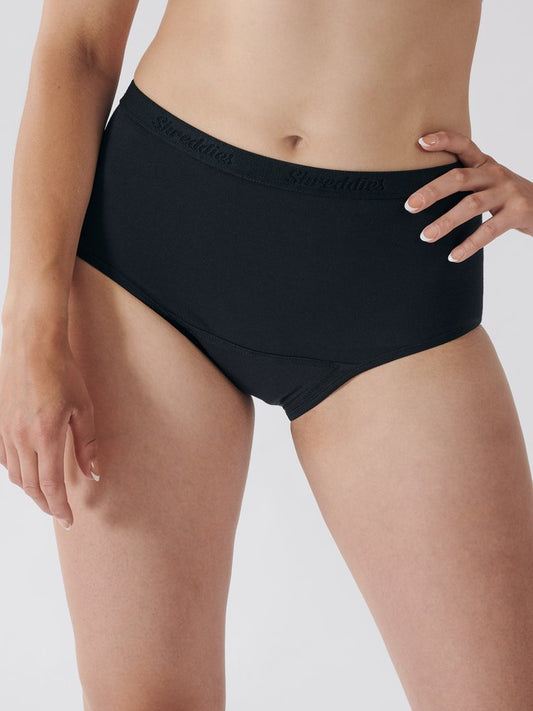
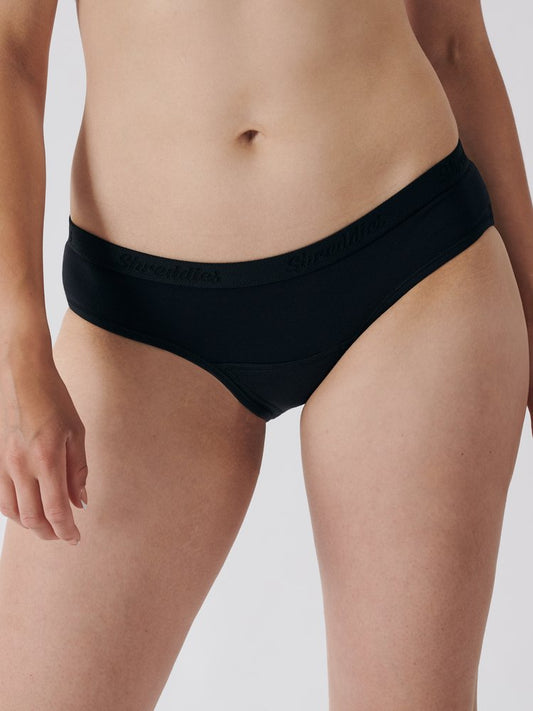
For women: Briefs, hipsters, and high-waist options built with the same construction quality as premium lingerie. The activated carbon filtration panel is discreet, and the overall aesthetic is underwear-first.
SHOP WOMEN'S

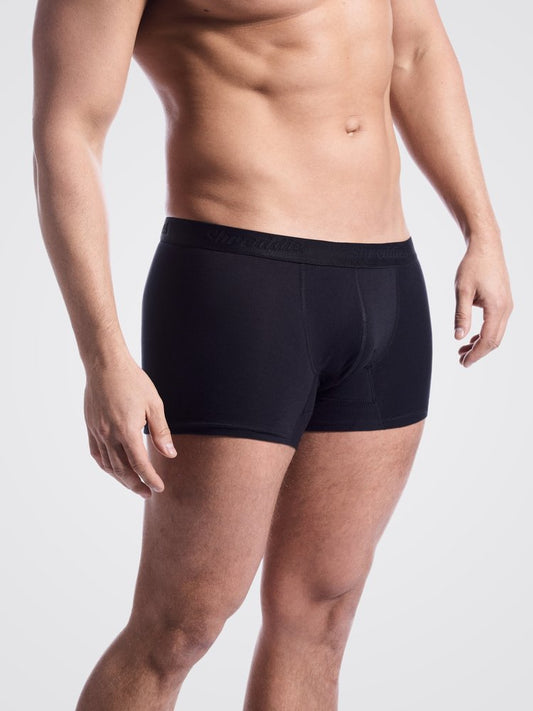
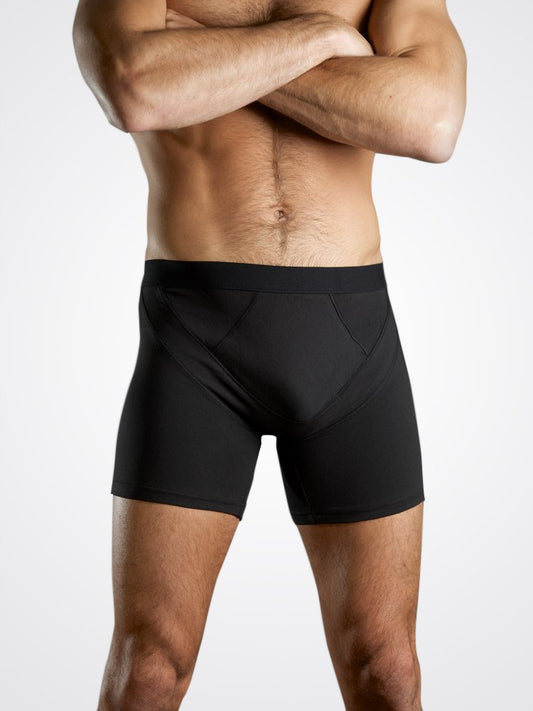
For men: Boxers, boxer briefs, and briefs with the same everyday wearability focus. Nothing about the construction announces itself to anyone but the wearer.
SHOP MEN'S
The full range, sizing, and style options are available at shreddiesusa.com.
The Confidence Restoration Factor
What odor control underwear guides almost universally miss is that this product category isn't ultimately about fabric. It's about reclaiming the mental bandwidth that gas anxiety quietly consumes.
For those living with IBS, Crohn's disease, food intolerances, post-surgical recovery, or perimenopause — and for people who simply produce more gas than average — the daily cognitive overhead of managing social situations is real and exhausting. The strategic positioning in meeting rooms. The calculation before ordering food at a restaurant. The reluctance to take long flights, commit to group fitness, or spend extended time in close proximity to people who can't be easily moved away from.
Shreddies' philosophy is built around dismantling that calculation entirely. When odor is neutralized before it escapes, the social math disappears. You stop managing around the problem and start moving through the world without it as a variable.
This matters particularly for people with chronic digestive conditions. Stress worsens gut symptoms; digestive anxiety generates stress. Research published in the American Journal of Gastroenterology has documented the significant quality-of-life impact that gas-related social anxiety places on people living with IBS — a burden that sits as much in the mental health dimension of the condition as in its physical symptoms. Removing that layer has a measurable effect on daily experience that goes beyond the purely physical.
What Shreddies Won't Do
In the spirit of the honest approach that defines this brand: Shreddies filter odor. They don't reduce gas volume, treat any underlying digestive condition, or replace dietary management or medical care. They're not a treatment — they're a confidence tool. You may still feel the gas; the social consequence of that gas is what disappears.
How to Care for Odor Control Underwear Without Killing the Technology
Even well-designed odor control technology can be undone by poor laundry habits.
Wash after every wear. Bacterial load and odor compounds accumulate with each use; consistent laundering prevents buildup that degrades performance.
Use fragrance-free detergent. Scented detergents can clog micropores in activated carbon fabric and reduce adsorption capacity over time.
Skip the fabric softener. It deposits a coating on fibers that interferes with both antimicrobial treatments and activated carbon function. Makes fabric feel good; makes the technology work worse.
Air dry when possible. High heat degrades elastic, shortens fabric lifespan, and can damage antimicrobial coatings faster than lower-temperature alternatives.
Follow the care label. Washing Zorflex-containing garments at the recommended temperature supports the carbon's regeneration cycle and keeps filtration effective long-term.
5 Mistakes People Make When Buying Odor Control Underwear
1. Buying for sweat when the actual problem is gas.
Antimicrobial underwear handles bacteria-driven sweat odor well. It does nothing for flatulence. Different problems, different solutions — not interchangeable.
2. Taking "odor-resistant" at face value.
It can mean silver ions, a scented finish, or simply a slightly less absorbent fabric. Read what the technology actually is, not the claim on the packaging.
3. Optimizing for price rather than cost per wear.
A budget pair with a surface coating loses effectiveness within weeks. A pair with woven-in activated carbon technology costs more and holds full effectiveness considerably longer. The math on cost per wear favors quality decisively.
4. Buying one pair and wondering why it doesn't fit daily life.
Odor control underwear needs to be laundered between wears — one pair creates a logistics problem. A rotation of three to five makes consistent daily use practical rather than an inconvenience.
5. Letting embarrassment prevent the research.
The most common reason people don't find the right solution is that they never look. Gas is a universal human biological function. The products exist. There is no reason to keep managing around a problem that has a direct solution.
Frequently Asked Questions: Odor Control Underwear
What is the most effective type of underwear for gas odor specifically?
Activated carbon underwear — particularly products using Zorflex technology — is the only category independently validated to filter intestinal gas odor. Antimicrobial silver and bamboo are designed for sweat-based odor and won't address flatulence.
How long does odor control underwear last?
Surface-treated antimicrobial products typically lose effectiveness within 20–30 washes. Activated carbon cloth like Zorflex regenerates with every wash and maintains filtration for several hundred washes when cared for properly.
What is the best odor control underwear for IBS or Crohn's disease?
Odor control underwear doesn't treat IBS or Crohn's symptoms. However, Shreddies USA — with activated carbon Zorflex technology — is the best option for these conditions because it's the only technology validated to filter flatulence odor, which is the primary social confidence concern. It can meaningfully reduce the gas-related anxiety that significantly impacts quality of life for people with these conditions.
Is there a visible difference between regular underwear and odor control underwear?
Not in well-designed products. Shreddies look and feel like normal underwear. The activated carbon panel is internal and discreet — indistinguishable to anyone but the wearer.
What makes Zorflex different from regular charcoal-treated fabric?
Zorflex is a military-grade activated carbon cloth — woven as a specialized material with high surface area and adsorption capacity, not a charcoal finish on a standard fabric. Independently tested at De Montfort University and validated for flatulence odor filtration. Surface treatments can't replicate that durability.
Is odor-control underwear suitable for everyday wear?
Yes. Shreddies are built as everyday garments — comfortable, available in multiple styles for men and women, requiring no changes to normal wear or laundering routines.
Medical Disclaimer
The information provided in this article is intended for general informational purposes only and does not constitute medical advice, diagnosis, or treatment guidance. Odor control underwear is not a medical device and is not intended to diagnose, treat, cure, or prevent any health condition. If you are experiencing digestive symptoms, unexplained changes in bowel habits, abdominal pain, or any other health concerns, please consult a qualified healthcare provider. The product information relating to Shreddies USA in this article reflects publicly available brand and research information and does not constitute a medical endorsement or recommendation for any specific condition. Individual results will vary.