Can You Fart During Sleep? The Midnight Science Your Body Is Running Without You
Every night, somewhere between seven and nine hours pass during which you have zero awareness of, zero control over, and zero memory of what your body is doing. Your heart beats on its own schedule. Your lungs expand. Your brain files the day into long-term storage. And your digestive system does exactly what it does all day, because nobody told it you were asleep.
The question of whether you can fart during sleep has a simple answer: yes.
Definitively, universally, and often with more enthusiasm than the person producing it would ever voluntarily claim. The more interesting question is the one that rarely gets asked: how does a body that is supposedly resting manage to run a fully operational gas production and release program for eight hours without waking its owner once? And why does the person sharing your mattress always seem to know more about your overnight output than you do?
This is the science of nighttime flatulence — the shift your gut has been running without you since the day you were born, without filing a single report.
The Short Answer: Yes, You Can Fart During Sleep
The 60-second version: your body passes gas during sleep regularly, involuntarily, and usually without disturbing you at all.
During sleep, the muscles responsible for controlling gas release relax as part of the body's broader shift into a lower-tension physiological state. Gas that has built up in the intestines, both from daytime digestion and from bacterial fermentation that runs continuously through the night, finds progressively less resistance as sleep deepens. The result is involuntary gas release that happens silently or loudly, odor-free or memorable otherwise, without the person producing it ever knowing it occurred.
Most adults significantly underestimate how much gas they pass overnight. This isn't because nighttime gas is rare. It's because they were unconscious for the entire event.
Your Gut Works the Night Shift
When you fall asleep, the voluntary parts of your nervous system finally get a break. The involuntary parts do not.
Digestion is managed primarily by the autonomic nervous system, responsible for all bodily functions that run without your input: breathing, heart regulation, and the grinding machinery of the gastrointestinal tract. It requires no conscious direction and recognizes no distinction between your waking hours and the time you spend horizontal and unconscious.
Throughout the night, gut bacteria continue doing what gut bacteria do: fermenting whatever undigested carbohydrates, dietary fibers, and residual food matter made it through the small intestine and into the colon. This fermentation is normal and essential, but it produces gas as a byproduct — a mixture of odorless gases including carbon dioxide, hydrogen, and methane in significant volumes, plus the sulfur-containing compounds responsible for odor in smaller but considerably more noticeable quantities.
These gases don't politely wait for morning. They build pressure and seek the path of least resistance toward the exit.
The volume of overnight gas depends on what you ate, when you ate it, how efficiently your small intestine absorbed nutrients, and the particular character of your intestinal bacteria. A dinner heavy in fermentable foods eaten close to bedtime is a standing reservation for an active night in the lower gut. Your digestive system will keep that reservation whether you feel like showing up or not.
The Part of Your System That Never Truly Clocks Out
Holding gas in while you're awake is a voluntary act — a constant, low-grade muscular negotiation you make dozens of times per day without consciously registering it. That control lives in the external anal sphincter, a ring of skeletal muscle under voluntary command. When you're awake and socially aware, this muscle is your primary and most reliable line of defense.
The internal anal sphincter operates on entirely different terms. It maintains a resting tone without any input from you, functioning as the involuntary baseline keeper that ensures gas and contents don't exit at will throughout the day. Together, both sphincters form what researchers have described as a remarkably active system — the American Journal of Physiology published work characterizing the anal sphincter as "a dynamic structure not often at rest," an observation so clinically measured it almost qualifies as humor.
During waking hours, the external sphincter backs up the internal one, giving you the voluntary control to assess the social situation and wait accordingly. During sleep, that backup goes offline. Skeletal muscle tone decreases across the body as the nervous system shifts into its restored state, and the external sphincter relaxes along with everything else. The internal sphincter remains on duty, but it is a more permissive gatekeeper — and when gas pressure reaches a sufficient level against a relaxed external sphincter, gas passes without consultation, without awareness, and without any available option for redirection.
A Sleep Stage Map: When Gas Is Most Likely to Escape
Sleep is not a uniform state. Your body cycles through four distinct stages each night, each with different effects on muscle tone and gut behavior. A typical night involves four to six complete cycles, each running approximately 90 minutes.
Stage N1 - Light Sleep
The transition between wakefulness and sleep. Muscle tone begins to ease, but the external sphincter hasn't meaningfully relaxed. This is the last window where your body retains something close to voluntary control.
Stage N2 — Established Light Sleep
Heart rate slows, body temperature drops, and muscle relaxation deepens. The external sphincter has eased considerably, and small, quiet gas releases become possible. This stage occupies roughly half of total sleep time, making it statistically the most common stage at any given moment of the night.
Stage N3 — Slow-Wave Deep Sleep
This is where overnight gas is most likely to escape. N3 brings the deepest reduction in voluntary muscle tone of the entire night. The external sphincter reaches its most relaxed state; gas that has been accumulating since dinner has both the pressure and the pathway to exit without meaningful resistance. Deep sleep is concentrated in the first half of the night, when post-dinner fermentation is also running at peak production. The timing is not coincidental.
REM Sleep — Rapid Eye Movement
REM brings a striking paradox: the brain becomes highly active while most skeletal muscles enter temporary paralysis. This atonia extends to voluntary sphincter control. Gas release during REM is entirely possible, and as the night progresses, REM periods lengthen — the final cycle before waking can run 45 minutes or more — making the early morning hours their own concentrated window.
Across four to six complete cycles, your body makes multiple passes through both deep NREM and extended REM. That is four to six distinct windows per night where the conditions for involuntary gas release are actively met.
Why You Never Know You're Doing It
Here's the part that consistently surprises people: your own farts almost never wake you up.
During sleep, particularly in deeper stages, the brain actively filters incoming sensory information. Stimuli that would command immediate attention while awake — an unexpected sound, an odor, a sensation — require significantly greater intensity to cross the threshold of conscious awareness. The brain is running aggressive quality control on what it lets through.
Your own flatulence apparently doesn't register as sufficiently alarming to trip this filter. There's also an element of perceptual adaptation — the brain doesn't treat its own biological processes as external threats, and signals from within your immediate personal envelope get deprioritized.
The asymmetry here is both real and somewhat pointed: a partner's gas — external, unexpected, unannounced — is far more likely to rouse you than your own. It presents as foreign input worth investigating. Your own production gets filed as background.
This is the fundamental architecture of why you are always the last person in the bed to know what happened overnight.
What Makes Nighttime Gas Worse
Some degree of nocturnal flatulence is entirely normal and no cause for concern. Several factors, however, reliably amplify both the volume and the odor of overnight gas.
Late-Night Eating
Timing matters significantly. Food consumed within two to three hours of bedtime has less opportunity to clear the small intestine before you fall asleep, delivering more undigested substrate to the colon during the overnight window. The closer to bed, the more your gut bacteria have to work with while you're horizontal and unconscious.
High-FODMAP Foods in the Evening
FODMAPs — fermentable oligosaccharides, disaccharides, monosaccharides, and polyols — are carbohydrates that resist full absorption in the small intestine and arrive in the colon available for bacterial fermentation. The list includes familiar staples: beans and lentils, onions and garlic, wheat-based foods, lactose-containing dairy, apples, and many other fruits and vegetables. An evening meal built heavily around these foods, eaten late, is among the most reliable setups for active nighttime gas production.
IBS, Crohn's Disease, and Related Conditions
People managing irritable bowel syndrome or Crohn's disease tend to experience more significant nighttime flatulence. Gut motility is often dysregulated in these conditions, and microbiome composition may amplify fermentation activity. If nighttime gas is persistent, disruptive, or accompanied by abdominal pain, bloating, or changes in bowel habits, it warrants a conversation with a healthcare provider. Shreddies USA's resources on IBS and Crohn's offer useful context for people navigating these conditions.
Sleep Position
Body position during sleep affects how gas moves through the large intestine. Left-side sleeping aligns with the anatomy of the colon — gravity assists the natural movement of contents from the ascending colon (right side) through the transverse and descending colon (left side) toward the rectum, supporting smoother motility. Right-side sleeping can slow this process, creating conditions for gas accumulation. Flat back sleeping generates its own pressure dynamics that can encourage passage at less predictable intervals.
Carbonation and Swallowed Air
Evening sparkling water, soda, or beer delivers a ready-made gas supply to the digestive system just before its overnight processing window opens. Air swallowed throughout the day from eating quickly, drinking carbonated beverages, or chewing gum adds to the intestinal gas inventory. Neither source distinguishes between day and night.
The Bedroom Dimension: What Nobody Talks About
There is a dimension to nighttime gas that medical explainers reliably skip over: for most adults, sleep is a shared experience.
Farting in your own bed, alone, is a non-event. Farting in a shared bed — reliably, nightly, in ways your partner is apparently tracking while you remain entirely unaware — is something different. It introduces an intimacy variable that no daytime gas scenario carries: you are unconscious and completely undefended. There is no preparation, no timing strategy, no opportunity to position yourself near an open window or blame the dog. Your body runs its overnight program on its own authority, and whatever it produces is produced in the immediate vicinity of another person.
For people whose overnight gas is particularly odorous — due to diet, a digestive condition, or simple biology — this can be a persistent and legitimate source of private anxiety. Daytime management strategies offer no meaningful help here. You can eat dinner early. You can choose your foods carefully. You can go to bed feeling prepared. None of that changes what your external sphincter does at 3 a.m.
This is exactly the gap that Shreddies were designed to fill.

Shreddies: Your Perfect Companion for Nighttime Gas
Shreddies are flatulence-filtering underwear built around a technology called Zorflex — an activated carbon cloth originally developed for military and medical use, applied here to a problem those fields never anticipated needing to solve.
The science is not complicated: activated carbon is extraordinarily porous at the molecular level and adsorbs odor-causing compounds as gas passes through the fabric, neutralizing the smell before it exits the garment. It doesn't mask odor with a competing scent. It eliminates it at the source.
The technology has been independently validated by researchers at De Montfort University. Shreddies' effectiveness has also been recognized with an American Cutting Edge Award. This is not novelty merchandise or a gimmick dressed up in scientific language. The filtration is real, the research is credible, and the activated carbon cloth maintains its odor-neutralizing properties through repeated laundering without degradation.
SHOP THE BEST UNDERWEAR FOR NIGHTTIME GAS

What Do They Look Like?
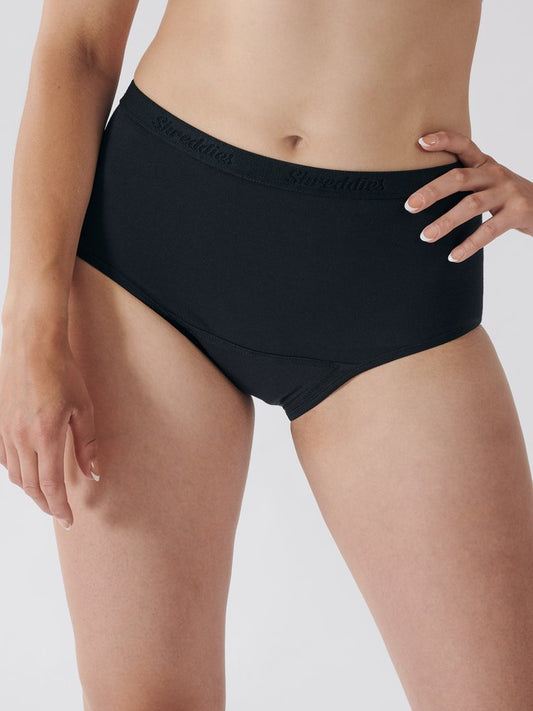
Shreddies look just like everyday underwear. Men's styles include hipsters and boxers. Women's styles include high-waisted and bikini briefs. None of them announce their purpose to anyone who sees them. The Zorflex filtration layer is built into the seat of the garment — not clipped on, not visible, not distinguishable from standard underwear by anyone who doesn't already know it's there.
SHOP THE BEST ODOR-CONTROL UNDERWEAR FOR WOMEN

SHOP THE BEST ODOR-CONTROL UNDERWEAR FOR MEN

What Do They Do at Night?
For daytime use, Shreddies offer freedom of movement — the ability to eat what you want, go where you need to go, and stop spending cognitive energy calculating your digestive schedule around social obligations. That freedom is valuable.
For nighttime use, the value is different and arguably more fundamental.
Sleep is the one context where you have no capacity to manage anything — no timing adjustments, no exit strategies, no contingency plans. The external sphincter relaxes on its own schedule, and your body produces what it produces. Shreddies work in exactly that context. The Zorflex layer doesn't distinguish between a deliberate release and an unconscious one; it processes both the same way, neutralizing odor at the fabric before it can travel.
You can sleep without the low-grade anxiety of what your body might be contributing to the air quality in your bedroom. Your partner can sleep through the night without being on the receiving end of your overnight program. The morning conversation that nobody wants to have simply doesn't happen. What the body does at night stays between you and your Shreddies.
Where They Make the Biggest Difference at Night
The bedroom scenarios where Shreddies deliver real confidence are specific to sleep, and distinct from anything a daytime strategy can address.
Sharing a bed with a new partner.
The early stages of a relationship carry enough navigational complexity without overnight digestive surprises entering the picture. Wearing Shreddies to bed removes one variable entirely and lets you focus on everything else.
Sleeping in unfamiliar environments.
Guest rooms, hotel stays, shared accommodations — any situation where you're sleeping near people outside your household and have no control over proximity or ventilation. Shreddies carry the same protection anywhere you take them.
Living with IBS or Crohn's disease.
For people managing conditions that make overnight gas more frequent and more odorous, standard dietary adjustments can help during the day but offer limited protection at night. Shreddies provide consistent coverage regardless of what the gut decides to do after midnight.
Waking up earlier than your partner.
Those quiet morning hours — the slow return to consciousness before anyone else stirs — are when the body completes its final REM cycles, and overnight gas production has its last say. Shreddies are there for that too.
The Philosophy Behind the Product
Shreddies is built on the position that managing gas is not something anyone should feel ashamed of — it is a physiological reality, and a particularly significant one for people living with IBS, Crohn's disease, colitis, food intolerances, and other digestive conditions. Sometimes bodies just do what they do, and practical solutions exist.
UNDERWEAR WITH ODOR-FREE CONFIDENCE. FINALLY.
Practical Steps for Reducing Nighttime Gas
If you'd prefer to give your overnight digestive system somewhat less material to operate on, several adjustments can make a measurable difference.
Finish eating earlier.
Aim to complete your last meal at least two to three hours before sleep. This gives the small intestine more processing time and reduces the volume of undigested food arriving in the colon during the overnight window.
Front-load fermentable foods.
Save your highest-fiber, highest-FODMAP foods for lunch or early dinner. Beans, lentils, garlic, onions, cruciferous vegetables — these are worth eating, but they're more digestively manageable when your body has the full afternoon and early evening to work through them.
Try sleeping on your left side.
Left-side positioning supports the natural direction of colon motility. It won't eliminate overnight gas, but it can reduce the accumulation that creates higher-pressure release.
Put down the evening carbonation.
Sparkling water, soda, and beer in the hour or two before bed add gas directly to your digestive inventory at the worst possible time. Still water is the calmer choice.
Eat more slowly.
Rapid eating means swallowed air, and swallowed air has to go somewhere. Slowing down at meals reduces the air intake that contributes to intestinal gas volume.
Consider probiotics.
A well-populated, balanced intestinal microbiome ferments food more efficiently and tends to produce less gas overall. Regular consumption of probiotic-rich foods — plain yogurt, kefir, kimchi, miso — can gradually shift the bacterial balance in your favor.
None of these steps will eliminate nighttime flatulence, and none of them are meant to. The body produces gas as a normal and healthy byproduct of digestion. The goal is proportion and comfort — not a body that has ceased functioning.
FAQs: Farting During Sleep
Is it normal to fart during sleep?
Completely normal. The muscles controlling gas release relax during sleep, bacterial fermentation continues through the night, and the body has no mechanism for suppressing the output during unconsciousness. Passing gas while asleep is universal — most people are simply not present for it.
How often does the average person fart during sleep?
Adults pass gas somewhere between 10 and 20 times per day on average, and a meaningful proportion of that occurs overnight. The exact frequency depends on diet, intestinal bacterial composition, digestive health, and how many complete sleep cycles a person completes in a given night.
Can farting during sleep indicate a health problem?
Occasional nighttime gas is not a concern. However, if nighttime flatulence is severe enough to wake you regularly, or if it accompanies significant bloating, abdominal pain, cramping, or changes in bowel habits, it's worth discussing with a healthcare provider. These can signal IBS, food intolerances, or other conditions that respond well to targeted management.
Does sleep position affect how much gas you pass at night?
Yes. Sleeping on the left side generally supports gut motility due to the anatomy of the large intestine, which travels right-to-left toward the rectum. Right-side sleeping can slow this process. Flat back sleeping creates conditions for more pressure-driven release. Left side is generally the most motility-friendly position.
Can dietary changes actually make a difference to nighttime gas?
Meaningfully, yes. Moving your highest-fermentable foods to earlier in the day and finishing meals two to three hours before bed reduces the fermentation load active during your sleep window. The volume and odor intensity of overnight gas both respond to diet timing, though not to elimination.
Do Shreddies work for nighttime gas?
Yes. Shreddies use activated carbon cloth (Zorflex) to adsorb and neutralize gas odor as it passes through the fabric. Worn to bed, the filtration works exactly as it does during the day — the activated carbon has no awareness of business hours.
Medical Disclaimer
This article is intended for general informational purposes only and does not constitute medical advice, diagnosis, or treatment. Nighttime flatulence is a normal physiological process for most people. However, persistent, severe, or painful gas, significant bloating, or changes in bowel habits may indicate an underlying digestive condition and should be evaluated by a qualified healthcare provider.
Information about Shreddies USA products is provided for general informational purposes only. Shreddies are a comfort and confidence aid — they are not a medical device and do not diagnose, treat, or cure any medical condition.
Always consult a qualified healthcare professional for concerns about your digestive health.